Key Takeaway
- A Pilates ring is best for control, posture, and muscular endurance, not as a substitute for heavy strength training.
- Most adults should buy a ring around 35 to 38 cm. Petite users may prefer a smaller option.
- In Malaysia, entry-level marketplace rings can be found from about RM10 to RM25, while branded studio-style models can sit around RM165 to RM169.
- Beginners do not need a Pilates ring to start Pilates. A good mat usually makes more sense first.
- The ring works best as part of a broader routine that also includes regular aerobic and strength-focused activity.
Table of Contents
ToggleA Pilates ring, also called a Magic Circle, is a small resistance prop used in mat Pilates to add light-to-moderate tension, improve movement feedback, and make core, thigh, chest, and glute exercises feel more precise.
Quick Recommendation Table: Which Pilates Ring Should You Buy?
The right ring depends less on trend and more on your body size, training stage, and whether you are buying for trial use or long-term home practice.
Use Case | Best Fit | Recommended Size | Budget Guide | What To Buy |
First-time beginner testing Pilates at home | Average adult frame | about 35–38 cm | RM10–RM25 | Basic marketplace ring with dual pads, good enough to test whether you will actually use it |
Petite user under roughly 155 cm | Smaller frame | 30-31 cm if available, otherwise a lighter-feel 35 cm ring | RM15–RM40 | Smaller or softer ring that feels easier to control in chest and thigh work |
Regular mat Pilates user | Average to larger frame | 35–38 cm | RM40–RM80 | Mid-range ring with better grip comfort and shape retention |
Frequent home user who wants better durability | Any fit, but especially adults who train 2–4 times weekly | 35–38 cm | RM120–RM200+ | Branded ring with stronger core and better handles; more likely to keep shape over time |
Small apartment / condo home gym | Any fit | 36 cm usually easiest | Any | Prioritise light weight, storage ease, and dual-sided padding over brand prestige |
Buying mainly for general strength or visible muscle gain | Any fit | Not the main issue | Redirect budget | Skip the ring first and buy dumbbells or bands instead; the ring is better for Pilates-style control than hypertrophy-first training |
Medical Disclaimer: This article is for general fitness education only. If you are pregnant, postnatal, injured, or dealing with pain or pelvic-floor symptoms, speak to a qualified healthcare professional or physiotherapist before starting a new routine.
What Is A Pilates Ring?
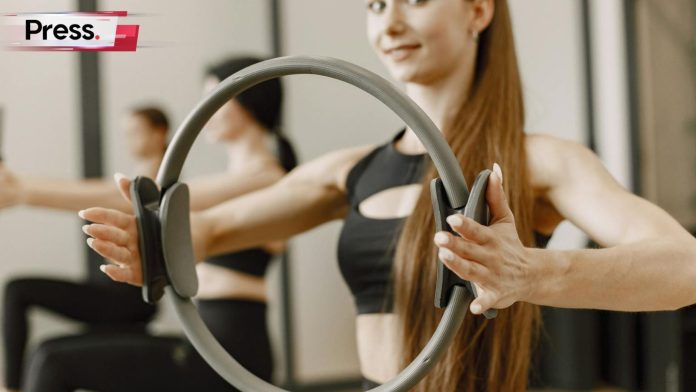
A Pilates ring is a flexible circular resistance tool with padded grips that lets you press inward or outward during mat exercises.
You will also see it called a Magic Circle or sometimes cincin pilates in Malaysia-facing listings. Many current product pages describe diameters around 35 cm to 38 cm, which is roughly the same size range most adults use for general mat practice.
Its main role is not heavy resistance. It gives you a fixed point to press against, which helps improve control and body awareness during slow, low-impact movements.
“The Pilates ring isn’t about how hard you squeeze—it’s about how well you control the movement.”
What Does A Pilates Ring Actually Help With?
A Pilates ring helps improve tension, alignment, and exercise awareness.
It is commonly used for:
- Core control
- Inner-thigh engagement
- Chest and upper-body work
- Outer-hip and glute activation
- Posture and movement feedback
That feedback is one of its biggest strengths. The ring helps you notice when your knees drift, shoulders tense up, or core engagement drops.
Unlike larger machines such as Reformer Pilates or Cadillac Pilates, the ring is portable and designed for home use.
Do You Need A Pilates Ring To Start Pilates?
No, a Pilates ring is optional. Most beginners should buy a good mat first.
You can start Pilates effectively with bodyweight and a suitable mat. The ring becomes more useful when you already know the basics and want more challenge or better movement feedback.
For most Malaysians, the smarter order is:
- Get a proper mat → read our Pilates mat buying guide
- Learn basic movements → explore Pilates classes in Malaysia
- Add accessories like the ring later
Pilates Ring Vs Resistance Bands Vs Dumbbells
The right tool depends on whether you want Pilates-style tension and feedback, wider home-workout variety, or heavier loading for strength and muscle gain.
Feature | Pilates Ring | Resistance Bands | Dumbbells |
Main Training Feel | Fixed pressing tension and movement feedback | Elastic resistance through range | Gravity-based external load |
Best For | Mat Pilates, posture, inner-thigh, chest, core work | General home strength, glutes, rows, travel workouts | Strength progression, hypertrophy, heavier loading |
Joint Loading Feel | Low external load | Usually low to moderate | Moderate to high depending on load and form |
Space Needed | Very small | Very small | Small to moderate |
Entry Cost In Malaysia | Around RM10–RM25 for many marketplace options | Often low-cost, varies by band type | Usually higher once you buy meaningful weight |
Best First Buy For Pure Beginners | After mat purchase | Often strong value | Better if strength is the main goal |
The simplest verdict is this. Buy a Pilates ring if you already like mat Pilates and want more cueing and targeted tension. Buy bands if you want a flexible all-round home tool. Buy dumbbells if your main goal is visible muscle gain or heavier strength work.
For Malaysian home users in condos or smaller apartments, the ring has one practical edge: It stores easily and works well indoors year-round. That matters because equipment you can tuck beside a mat is more likely to be used consistently than equipment that clutters the room.
For more variety, some people combine ring exercises with tools like a stability ball—see our Pilates ball buying guide.
What Size Pilates Ring Should You Buy?
Most adults should start with a Pilates ring around 35 cm to 38 cm.
A smaller ring may suit petite users better, especially if they want something easier to control. In Malaysia, Pilates ring sizes are usually listed in centimetres, so a practical guide is:
- 35 cm to 38 cm for standard adult use
- Around 30 cm for smaller-framed users, if available
Before buying, check these details:
- Dual-sided padding: needed for both inward squeezes and outward presses.
- Comfort of the handles: important for chest and arm work.
- Core feel: cheaper rings may feel softer or lose shape faster over time.
- Storage reality: if it is awkward to store, use tends to drop.
How Much Does A Pilates Ring Cost In Malaysia?
Pilates rings in Malaysia currently span a wide range, from low-cost entry models around RM10 to branded studio-style options around RM165 to RM169.
That price spread matters because it changes the buying decision. If you are only curious and want to test the concept, a cheaper ring may be enough. If you already know you enjoy mat Pilates and plan to use the tool two or three times a week, the better question becomes comfort and durability rather than the lowest possible price.
A simple Malaysia-oriented buying framework looks like this:
Tier | Price Range | Best For | Main Trade-Off |
Budget | RM10–RM25 | Curious beginners | Comfort and long-term shape retention may be weaker |
Mid-Range | RM40–RM80 | Regular home users | Better build, but still varies by seller |
Premium | RM120–RM200+ | Frequent users, instructors, users who want longer-lasting gear | Higher upfront cost, but usually better handles and feel |
Top 5 Pilates Ring Exercises For Beginners
Start with low-complexity movements where the ring improves control instead of making the workout chaotic.
1. Inner Thigh Squeeze
This is the easiest beginner move because the ring gives a clear target.
Lie on your back with knees bent and feet flat. Place the ring between the thighs above the knees, exhale, squeeze gently for a few seconds, then release slowly. The main goal is smooth pressure and stable hips, not the hardest squeeze possible.
2. Standing Chest Press
This adds upper-body tension without needing heavy loading.
Stand tall, hold the ring at chest height, and press inward through the palms. Keep the shoulders down and avoid pushing the head forward. This is one of the simplest ways to use the ring for chest and arm awareness.
3. Bridge With Ring
This combines glute work with inner-thigh control.
Place the ring between the thighs and perform a slow bridge while keeping steady pressure on the pads. This can help prevent the knees from drifting and make the movement feel more connected through the hips and trunk.
4. Outer Thigh Press
This variation adds hip-stability work and makes dual-sided padding worth having.
Place the legs inside the ring and press outward gently. Keep the pelvis steady and avoid leaning back or locking the knees. This helps target the outer hip area and makes the ring feel more versatile than the usual inner-thigh squeeze.
5. Assisted Hamstring Stretch
The ring can also work as a stretching aid when used gently.
Hook one foot into the ring and use the handles to guide the leg upward into a hamstring stretch. The rigid structure gives more control than a towel, but the stretch should stay smooth and comfortable. Never force the range.
If you prefer a seated routine, you can also explore chair Pilates for beginners as an alternative approach.
Common Myths About Pilates Rings
Most Pilates-ring myths come from confusing muscle fatigue with bigger fitness claims.
Myth | Why People Believe It | The Truth |
“It burns inner thigh fat.” | You feel an intense local burn. | The ring trains the muscles you are using, but fat loss does not happen from squeezing one area alone. Whole-body energy balance and activity still matter. |
“It replaces weight training.” | It creates shaking and fatigue. | The ring can strengthen and challenge muscles, but it does not replace heavier progressive loading for muscle size or major strength development. |
“It cures pelvic floor problems.” | Inner-thigh work can feel connected to the pelvic region. | Ring exercises may support general control work, but clinical pelvic-floor issues need specific professional assessment and treatment. |
Pilates Ring Do’s And Don’ts
Use the ring to improve quality, not to chase the hardest squeeze.
✅ Do
- Exhale on effort and inhale on release.
- Control the return phase instead of letting the ring spring back.
- Place pads on muscle, not directly on joints.
- Use it inside a broader routine that still includes regular aerobic movement and weekly strengthening work.
❌ Don’t
- Don’t hold your breath while squeezing.
- Don’t force range in stretches or spine-heavy movements.
- Don’t buy the stiffest ring first if you are new.
- Don’t treat the ring as medical treatment for pain, postpartum issues, or pelvic-floor symptoms without professional guidance.
For better grip and stability during workouts, especially on smooth floors, consider using Pilates grip socks.
Is A Pilates Ring Worth Buying In Malaysia?
Yes, if you already enjoy mat Pilates and want a compact tool that adds more feedback and challenge.
A Pilates ring is useful because it is affordable, easy to store, and well-suited for home workouts in smaller spaces. But it is not essential, and it should not be your first purchase if you still do not own a proper mat.
The simplest buying logic is this: start with a mat, build the habit, then add the ring when you know you will use it.
If you plan to progress further, you can also explore advanced equipment like the Wunda Chair.
For more info, follow PR agency Malaysia.
Disclaimer: All of the content was thoroughly fact-checked and verified by our editorial team to ensure accuracy, clarity, and reliability.
Legal Disclaimer: All brand names, trademarks, and logos displayed on this website are the intellectual property of their respective owners. Their use herein is solely for identification purposes without written consent or direct affiliation from the respective owner.
Frequently Asked Questions On Pilates Ring
What is the main purpose of a Pilates ring?
It provides light isometric resistance and physical feedback to help you engage deep muscles—like the core and inner thighs—and maintain proper alignment during workouts.
What is the difference between a cheap and expensive Pilates ring?
Cheap rings (RM10–RM20) use plastic cores that warp and degrade quickly. Expensive rings (RM100+) use durable steel or fiberglass with premium grips for consistent, snap-proof resistance.
Is A Pilates Ring Good For Beginners?
Yes, but it is optional. Most beginners can start with bodyweight Pilates and add a ring later.
Is A Pilates Ring Better Than A Resistance Band?
Not always. A Pilates ring is better for Pilates-style control and feedback. A resistance band is better for broader workout variety.
How Often Should I Use A Pilates Ring?
For most people, 2 to 3 sessions per week is a good start.
Can A Pilates Ring Help With Weight Loss?
Not by itself. It can support exercise, but fat loss depends on your overall activity, calorie balance, and consistency.