
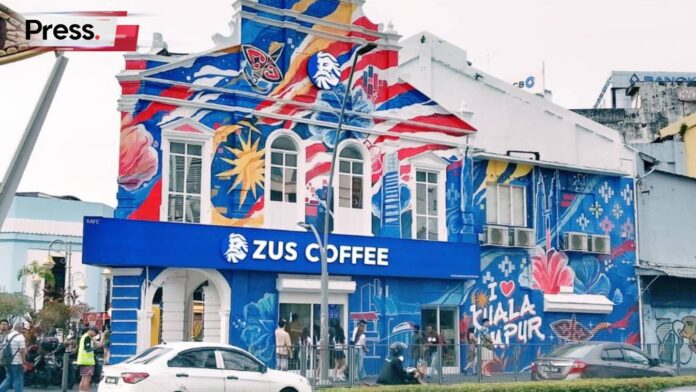
For many Malaysian SMEs, overseas expansion is often seen as the next stage of growth. However, entering a new market successfully requires more than opening a branch, translating marketing materials, or launching a local website.
Different countries have different consumer preferences, competitive landscapes, and cultural expectations. What works in Malaysia may not automatically resonate in Indonesia, Thailand, Vietnam, or Singapore.
That’s why ZUS Coffee’s May 2026 entry into Indonesia is worth paying attention to. Rather than treating Indonesia as simply another market to enter, ZUS appears to have built its launch around local relevance, through localisation, partnerships, credibility, and strategic PR.
While ZUS operates in the coffee industry, the lessons extend far beyond cafés and beverages. Malaysian SMEs planning to expand overseas can learn as much from how ZUS entered the market as from the fact that it entered at all.
Why ZUS’s Indonesia Launch Deserves Attention
Indonesia is one of Southeast Asia’s most attractive consumer markets. With a population of about 283.5 million (World Bank, 2024) and a strong coffee culture, it offers enormous growth potential. At the same time, it’s also highly competitive.
Consumers already have access to established brands such as Kopi Kenangan, Tomoro Coffee, Starbucks, and a large number of independent cafés. For a foreign brand, entering such a crowded market can be difficult.
Many companies respond by increasing advertising budgets, offering discounts, or aggressively promoting their achievements. ZUS appears to have taken a different route.
Instead of trying to convince Indonesians to embrace a Malaysian coffee brand, the company’s launch signals a focus on feeling relevant to Indonesian consumers from day one. That distinction may seem subtle, but it’s often the difference between being noticed and being chosen.
Read More: Starting a New Business in Malaysia: What to Know
Hyperlocalisation Beats Copy-Paste Expansion
One of the most common mistakes businesses make when entering new markets is what we call “copy-paste expansion.”
It usually looks like this:
- Build a successful model in Malaysia
- Open operations overseas
- Translate marketing materials
- Launch the same products
- Expect similar results
This approach may save time, but it often ignores what local consumers actually want.
ZUS’s Indonesia strategy points to a different approach through hyperlocalisation.
Unlike basic localisation (translation, pricing adjustments, or minor tweaks), hyperlocalisation goes deeper: it adapts products, messaging, partnerships, and experiences to match local expectations.
In coverage of the launch, ZUS indicated plans for Indonesia-exclusive beverages tailored to local tastes, alongside messaging that leans into Indonesian coffee culture and local credibility.
For SMEs entering new markets, this mindset shift can be transformative.
Instead of asking:
“How can we sell our existing product overseas?”
Ask:
“How can we solve local customer needs in this market?”
The second question tends to lead to better decisions and fewer expensive assumptions.
Don’t Enter a New Market Alone
Another standout aspect of ZUS’s entry was its partnership with Kapal Api Group.
Many expansion plans focus heavily on customers while overlooking local partnerships. But a strong local partner can dramatically improve a company’s chances of success.
Here’s what the right partner can provide:
| Benefit | Why It Matters |
|---|---|
| Market Knowledge | Understands consumer behaviour and local trends |
| Business Networks | Opens doors to suppliers and stakeholders |
| Operational Support | Helps navigate logistics and regulations |
| Brand Trust | Lends credibility to a new entrant |
Instead of arriving as a completely foreign company, ZUS entered Indonesia in partnership with Kapal Api Group, a major local coffee player. That changes how consumers, media, and industry stakeholders perceive the brand, especially early on, when trust is still being built.
For Malaysian SMEs, this lesson applies across industries.
Whether you operate in technology, manufacturing, education, retail, or professional services, identifying the right local partner can often accelerate growth faster than additional advertising spend.
Borrow Local Credibility Before Asking for Trust
One of the smartest aspects of the launch involved ZUS’s collaboration with Taufan Mokoginta, the 2023 World Coffee Roasting Championship winner.
ZUS worked with Taufan in a way that signals more than just product development. From a PR perspective, it helps transfer trust.
Consumers unfamiliar with a foreign brand are often reluctant to embrace it immediately. But when respected local experts are involved, scepticism tends to drop.
Instead of asking consumers to trust a Malaysian company from scratch, ZUS effectively invited them to trust someone local with established credibility.
This is a classic example of credibility borrowing, and many SMEs overlook it.
Local credibility can come from:
- Industry experts: consultants, specialists, researchers
- Professional associations: trade bodies and industry groups
- Universities: academic partnerships and research collaborations
- Creators/influencers: carefully selected subject-matter experts
- Community leaders: individuals with strong local influence
The specific partner will differ by industry, but the principle stays the same:
Trust is often easier to borrow than to build from zero.
PR Should Build Trust, Not Just Generate Coverage
Another important lesson from the public narrative around the launch is how the story was framed.
Many companies treat PR as a way to announce milestones:
- New offices
- New markets
- New products
- New investments
These milestones matter, but they aren’t always interesting to consumers. Consumers care about what those developments mean for them.
The stronger narrative for ZUS wasn’t simply “we entered Indonesia.” It was “we’re here in a way that fits Indonesia.”
In coverage and messaging around the debut, the focus consistently leaned into:
- Indonesian coffee culture
- Indonesian tastes
- Indonesian expertise
- Indonesian partnerships
That creates a more relatable story, and it makes a foreign brand feel less foreign.
A useful filter for SMEs planning PR during expansion is this:
“Why should local audiences care?”
Companies that answer that well tend to build stronger long-term acceptance than those chasing visibility alone.
Regional Success Creates Interest, Not Acceptance
Regional success can absolutely create awareness. Consumers may be more willing to try a brand that has proven itself elsewhere.
But awareness alone doesn’t guarantee adoption.
Expansion requires balancing two narratives:
- Credibility: “We’re proven and capable.”
- Relevance: “We understand you and your market.”
Many expanding businesses overemphasise the first narrative while neglecting the second. The result is a brand that becomes known, but not necessarily preferred.
The strongest expansion strategies build both.
Why Competing Against Kopi Kenangan and Tomoro Coffee Isn’t the Main Goal
One of the more interesting aspects of the launch coverage is what it didn’t focus on.
It didn’t obsess over head-to-head competition with Kopi Kenangan or Tomoro Coffee. Instead, it stayed focused on ZUS’s own positioning. That’s usually the better approach.
Many businesses get overly competitor-focused during expansion:
- How do we beat market leader A?
- How do we compete against company B?
- How do we take share from company C?
The better question is often:
“What unique value can we bring to this market?”
For ZUS, the positioning presented publicly points to a combination of:
- Affordable specialty coffee
- Technology-driven convenience
- Regional experience
- Local adaptation
That’s differentiation without forcing direct comparisons. For SMEs, this matters because competing head-on with established incumbents is rarely the easiest path to success. Finding a unique position is usually far more effective.
Read More: 10 Easy Ways Malaysians Can Support Local Businesses in 2026
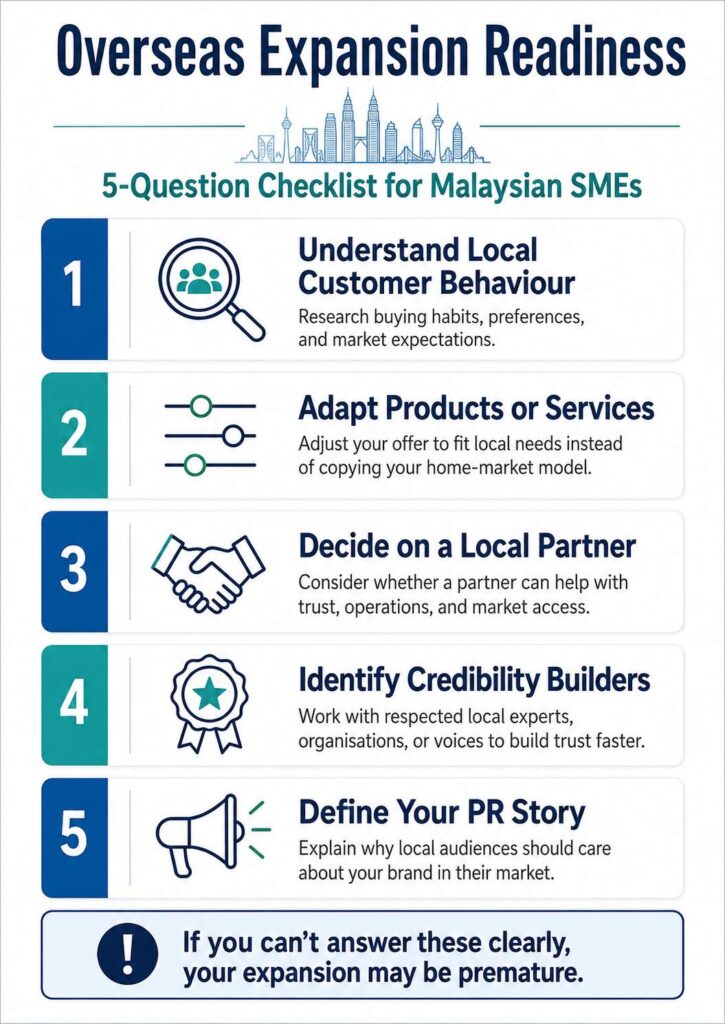
A Practical Overseas Expansion Checklist for Malaysian SMEs
Before entering a new market, ask these five questions:
| Question | Purpose |
|---|---|
| Do we truly understand local customer behaviour? | Prevents costly assumptions |
| Have we adapted our products or services? | Improves relevance |
| Do we need a local partner? | Reduces operational risk |
| Who can help build credibility? | Accelerates trust |
| What story are we telling through PR? | Shapes market perception |
If these questions remain unanswered, expansion efforts may be premature.
Many companies focus heavily on operations and sales while underestimating the importance of perception, trust, and localisation. ZUS’s Indonesia entry suggests those factors can strongly influence whether a market entry gains traction.
Learning the Right Lessons
ZUS Coffee’s May 2026 entry into Indonesia is a reminder that international growth isn’t simply about entering a new market. It’s about becoming relevant within that market.
From hyperlocalisation and strategic partnerships to credibility-building and thoughtful PR, the approach signals that successful expansion often requires adaptation rather than replication.
If your business is preparing to enter new markets, strategic PR can help build trust before customers, partners, and stakeholders ever interact with your brand. PRESS PR Agency, Malaysia’s reliable PR agency, helps businesses strengthen credibility, shape market perception, and create expansion stories that resonate with local audiences across Southeast Asia.
Authoritative Sources
- Marketing-Interactive — “ZUS Coffee brings Southeast Asian coffee playbook to Indonesia with Jakarta debut” (25 May 2026)
- Inside Retail Asia — “Zus Coffee brews up Indonesia expansion” (28 May 2026)
- World Bank — Indonesia Population Data (2024)
- World Coffee Roasting Championship coverage confirming 2023 champion (Taufan Mokoginta)
Frequently Asked Questions About Lessons SMEs can Learn From ZUS Coffee’s Indonesian Expansion
What Is Hyperlocalisation In International Expansion?
Hyperlocalisation means adapting your product, messaging, partnerships, and customer experience to the specific expectations of a local market rather than copying what worked at home and translating it.
Why Is Hyperlocalisation Important For Malaysian SMEs?
It reduces the risk of market misalignment by making your offer feel “built for locals,” which can improve acceptance, repeat purchases, and word-of-mouth.
Why Did ZUS Partner With Kapal Api Group?
A strong local partner can provide market knowledge, business networks, operational support, and credibility, helping a new entrant establish itself faster and more confidently.
What Can Businesses Learn From ZUS’s Collaboration With Taufan Mokoginta?
Collaborating with a respected local expert can transfer trust. It helps audiences feel more confident trying a new brand because a credible local voice is involved.
How Important Is PR During Overseas Expansion?
PR shapes perception early. Done well, it builds trust and explains why local audiences should care, before most customers, partners, or media ever experience the brand directly.
What Is The Biggest Lesson SMEs Should Take From ZUS’s Indonesia Entry?
Overseas growth works best when you prioritise local relevance (adapting to local tastes, norms, and expectations) instead of assuming regional success will automatically translate.