
Key Takeaways
- Solar panels turn sunlight into clean energy, helping Malaysia cut carbon emissions and costs.
- Incentives like NEM 3.0 and SolaRIS 2024 make solar more accessible to homes and companies.
- Solar adoption supports Malaysia’s 2050 net-zero ambition and a growing green economy.
- Common pitfalls include poor installation, wrong system sizing, and lack of maintenance.
- The opportunities ahead include battery integration, EV charging, and green financing.
Table of Contents
ToggleMalaysia typically receives about 4.2 to 5.6 kWh/m² per day of solar irradiance, which is well suited to photovoltaic generation. Together with the National Energy Transition Roadmap and the national goal of 70 percent renewable capacity by 2050, solar has become a cornerstone of Malaysia’s decarbonisation plan. (Source: Malaysia Renewable Energy Roadmap, Government of Malaysia NETR)
Solar is now a mainstream option for households, SMEs, and large corporations. This article explains how solar panels work, their role in sustainability, common mistakes to avoid, and the opportunities ahead for Malaysian users.
What Are Solar Panels and How Do They Work?
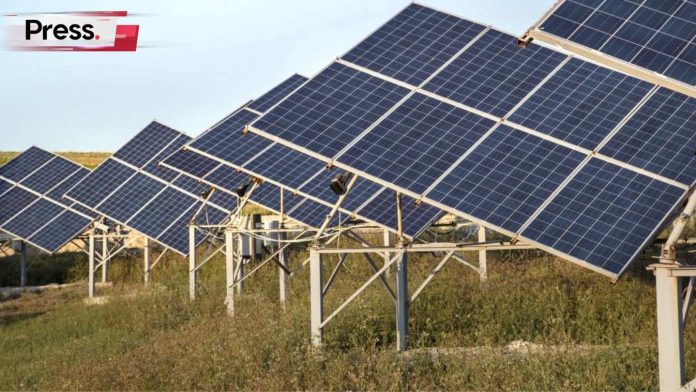
Solar panels, also called photovoltaic modules, generate electricity from sunlight. Each cell uses a semiconductor that releases electrons when light hits it, producing direct current. An inverter converts DC to AC for use at home or at a business.
Common system types in Malaysia
- On-grid under NEM 3.0: Connected to Tenaga Nasional Berhad. For NEM Rakyat, excess exports receive one-to-one bill credits in kWh for up to 10 years with rollover limits. For NOVA (commercial and industrial), export credits are based on the Average System Marginal Price and offset the next bill.
- Off-grid or hybrid: Adds batteries for backup or load shifting where needed.
Typical performance and lifespan
- Modern residential modules are about 20 percent efficient.
- Performance warranties are usually 25 to 30 years, often guaranteeing around 80 percent output at year 25.
- Inverters typically last 10 to 15 years, so budget for a mid-life replacement. (Source: SEDA Malaysia; NREL; Energy Commission Malaysia)
Why Solar Power Is Important for Malaysia’s Future
- Supports national renewable goals: Aligned with the 70 percent renewable share of installed capacity by 2050 in the NETR.
- Cuts fossil use and stabilises costs: Daytime self-generation reduces exposure to fuel volatility.
- Improves energy security: Decentralised rooftops reduce grid losses and enhance resilience.
- Empowers consumers and SMEs: NEM turns users into prosumers who generate and manage part of their own demand.
- Strengthens ESG: Businesses can pair PV with GITA or GITE tax incentives and green-financing programs such as GTFS 4.0 and GTFS 5.0. (Source: Government of Malaysia NETR; MIDA Malaysia; GTFS)
Read More: Why Businesses Need To Support Malaysian Sustainability
The Main Aspects of Solar Energy Adoption in Malaysia
Aspect | Key Insights | Local Context |
Economic | Typical bill reductions 40 to 70 percent for homes, 50 to 80 percent for businesses depending on load shape and NEM category. ROI often 5 to 7 years for homes, 4 to 6 years for C&I. | NEM 3.0 remains available with quotas. Financing via GTFS 4.0 or 5.0 and bank green loans. |
Environmental | A 4 kWp system can avoid roughly 3 to 5 tCO₂ per year, depending on output and the grid emission factor. | Based on typical specific yields in Malaysia and the Peninsular grid factor. |
Technological | New monocrystalline modules commonly ~20 percent efficient. | Malaysia sees about 4.2 to 5.6 peak sun hours per day. |
Social | Solar deployment supports jobs in installation, O&M, and supply chains. | Employment factors vary by project size and segment, so avoid a single fixed jobs-per-MW number. |
Policy | NEM 3.0, SolaRIS 2024 rebates for first-time residential adopters, and legacy FiT remain relevant in 2025. | Program specifics vary by category and timeline. |
(Source: SEDA Malaysia; TNB myTNB SolaRIS 2024; Malaysia Renewable Energy Roadmap; MIDA Malaysia)
Real-World Examples of Solar in Action
Residential
A 6 kWp system in Johor using a typical specific yield of about 1 500 kWh per kWp per year produces roughly 9 000 kWh per year. Using the Peninsular grid emission factor of 0.774 tCO₂ per MWh, that avoids about 7 tCO₂ per year.
Over 25 years, even accounting for gradual degradation, cumulative avoidance can exceed 140 tCO₂. Actual savings depend on tariff blocks, usage profile, NEM category, and financing. Typical installed costs for residential systems place 6 kWp around RM 24 000 to RM 36 000. (Source: Energy Commission Malaysia, Malaysia Renewable Energy Roadmap)
Commercial
Under NOVA, export credits are based on Average System Marginal Price and applied to the next bill. Well matched daytime loads often see 50 to 80 percent bill reductions and 4 to 6 year payback, subject to tariff and load shape.
(Source: SEDA Malaysia)
Common Misconceptions About Solar Power in Malaysia
“Solar does not work in cloudy weather.”
Panels still produce under diffused light, often 10 to 25 percent of peak on very overcast days. Rain can also help keep panels cleaner. (Source: NREL)
“Too expensive.”
PV costs have fallen significantly since 2010. Local financing, leasing, and green loans improve affordability for homes and SMEs. (Source: IRENA, MIDA Malaysia)
“High maintenance.”
In tropical climates, soiling losses are typically a few percent up to about 10 percent annually depending on rain, tilt, and local dust. Periodic cleaning maintains performance. (Source: Energy Commission Malaysia; Academic reviews on soiling in tropical climates)
“Must go off-grid.”
Most systems are grid-tied under NEM. Batteries are optional and used for backup or load shifting. (Source: SEDA Malaysia)
“Solar damages roofs.”
Properly engineered mounting protects the structure and can improve weatherproofing around penetrations. (Source: Energy Commission Malaysia)
Read More: Sustainable Supply Chain Management For Malaysian Businesses
Common Mistakes When Installing or Using Solar Power
- Wrong system sizing: Oversizing leads to unused exports, undersizing limits savings. A load analysis aligns array size with consumption and NEM rules.
- Ignoring roof orientation and shading: South-facing roofs with minimal shading perform best in Peninsular Malaysia.
- Choosing unlicensed installers: Always verify SEDA-accredited PV service providers and insist on certified components.
- Skipping maintenance: Dust and bird droppings reduce output. Plan light cleaning as needed, especially in dry seasons.
- Neglecting inverter replacement: Plan for an inverter change around 10 to 15 years.
- Overlooking local approvals: Some municipalities require permits or inspections, which can affect connection timelines.
- Unrealistic payback expectations: Solar returns compound over time. Evaluate with realistic tariffs, load shape, and degradation.
(Source: SEDA Malaysia, Energy Commission Malaysia; Academic reviews on orientation and soiling)
How Solar Power Helps Sustainability
- Environmental sustainability: Solar generation produces electricity without operational CO₂ emissions and supports progress on UN SDG 7 and SDG 13. (Source: United Nations Global Compact Malaysia)
- Economic sustainability: Predictable energy costs help households and companies. Sector growth supports local services and component supply chains. (Source: MIDA Malaysia)
- Social sustainability: Community and school projects build awareness and reduce local energy costs. (Source: SEDA Malaysia)
- Corporate sustainability: PV installations strengthen ESG scores and align with investor expectations. (Source: MIDA Malaysia)
Challenges and Opportunities Ahead
Key Challenges
Category | Challenge | Impact |
Financial | Upfront investment for homes can be RM 20 000 to RM 50 000 depending on size and hardware. | Limits access for low-income groups without financing support. |
Technical | Roof orientation, shading, and limited space. | High rises may need shared or community approaches. |
Awareness | Confusion around NEM categories and application steps. | Slower adoption in some areas. |
Regulatory | Approval timelines vary by local authority. | Installation delays and additional costs. |
Maintenance | Infrequent cleaning or lack of monitoring. | Gradual performance loss over time. |
(Source: SEDA Malaysia; Energy Commission Malaysia)
Emerging Opportunities
- Battery storage integration: Multi-year battery price trends support PV-plus-storage, aiding night-time use and backup.
- EV synergy: Solar-powered EV charging reduces transport emissions and supports fleet decarbonisation.
- Green financing growth: GTFS 4.0 and GTFS 5.0, plus GITA or GITE, lower the cost of capital for SMEs and homeowners.
- Digital monitoring: Smart meters and IoT dashboards improve maintenance and ROI forecasting.
- Community solar models: Shared rooftops or co-ops let apartment residents participate.
- Policy stability and expansion: Continued support attracts investment and innovation.(Source: Bloomberg NEF, GTFS, MIDA Malaysia)
Read More: 10 CSR Program Ideas Every Malaysian Company Should Consider
Residential vs Business Solar Adoption Comparison
Factor | Residential Users | Business and Industrial Users |
Average System Size | 4 to 6 kWp | 50 to 500 kWp |
Initial Cost (RM) | 24 000 to 36 000 | 150 000 to 1 million+ |
Bill Reduction | 40 to 70 percent | 50 to 80 percent |
ROI Period | 5 to 7 years | 4 to 6 years |
Main Incentives | NEM 3.0, SolaRIS 2024 | NEM 3.0 NOVA, GITA or GITE, GTFS 4.0 or 5.0 |
Financing Options | Green home loans, leasing | Green bonds, bank financing, GTFS-backed facilities |
(Source: SEDA Malaysia; TNB myTNB SolaRIS 2024; MIDA Malaysia; GTFS)
Malaysia’s Bright Path to Sustainable Energy
Solar power is transforming Malaysia’s energy landscape. With modern technology, strong incentives, and growing public support, PV systems are a smart investment for homes and businesses.
By avoiding installation mistakes, planning properly, and leveraging green financing, Malaysians can enjoy decades of clean and affordable energy while contributing to the national sustainability agenda.
Get the PR services of an experienced and trustworthy PR agency like Press.com, to help you implement sustainability the right way!
Disclaimer: The information provided in this article is for general educational and informational purposes only. While every effort has been made to ensure accuracy and relevance, the data, incentives, and regulatory details referenced here may change over time depending on updates from Malaysian authorities such as SEDA, KeTSA, and the Energy Commission.
Readers and businesses are advised to verify current programmes, eligibility requirements, and installation standards with certified solar providers or official government sources before making any financial or technical decisions. The author and publisher assume no responsibility for any loss, cost, or damage resulting from reliance on the information presented.
Frequently Asked Questions About Solar Panels
What Are The Benefits Of Using Solar Panels In Malaysia?
They lower electricity bills, cut carbon emissions, and promote energy independence through government incentives.
How Do Solar Panels Help Sustainability?
They create renewable electricity without burning fossil fuels, directly reducing Malaysia’s carbon footprint.
Can Solar Panels Work During Rainy Seasons?
Yes, panels still operate under diffused light, and rain naturally helps keep surfaces cleaner.
What Incentives Exist For Solar Panel Installation In 2025?
NEM 3.0 provides billing credits for exports. SolaRIS 2024 targeted first-time residential adopters with defined eligibility and timelines.
How Long Do Solar Panels Last?
Typically 25 to 30 years with around 80 percent output retention at year 25, with minimal maintenance.
Are Solar Panels Worth It For Small Businesses?
Yes. SMEs can combine energy savings with tax allowances and green financing to reach payback in a few years.