
Key Takeaway
- Signboard licenses in Malaysia are issued by local councils, not a centralized authority.
- Most physical business premises should seek approval before installing external signage.
- Many councils require Bahasa Malaysia on signboards and/or require it to be the most prominent language (exact formatting rules depend on the local council’s written requirements).
- Application requirements differ across councils (e.g., DBKL, MBPJ, MBSJ), so always check the correct local authority or Pihak Berkuasa Tempatan for your location.
- Incomplete or incorrect documentation is a common reason applications are delayed or rejected.
Table of Contents
ToggleA signboard license in Malaysia is an approval issued by local municipal councils allowing businesses to display signage outside their premises. The application typically requires business registration details, signboard design specifications, and compliance with local signage regulations, including Bahasa Malaysia requirements and size limitations, before installation is permitted.
Many business owners assume installing a signboard is a simple branding exercise. However, Malaysian local council advertisement by-laws require approval before installation.
This applies to shops, restaurants, clinics, offices, franchises, and mall tenants. Failure to comply may result in fines, signboard removal, enforcement notices, and delays in business licensing approvals.
Who Needs a Signboard License in Malaysia?
Most businesses operating from a physical location require a signboard license, especially if signage is visible externally.
Common examples include:
- Shopfront signage
- Lightbox signage
- Hanging signage
- External wall signage
- Outdoor banner signage
However, certain types may not require approval:
- Small indoor signage
- Temporary promotional posters inside premises
- Shopping mall signage (sometimes handled by mall management)
Because rules vary across councils, checking requirements early is critical.
Signboard License Decision Model
This practical decision matrix helps business owners understand whether a signboard license is typically required:
| Signboard Type | License Required | Authority | Complexity |
|---|---|---|---|
| Shopfront signage | Yes | Local Council | Medium |
| Lightbox signage | Yes | Local Council | Medium |
| Temporary banner | Sometimes | Local Council | Low |
| Mall signage | Usually Yes | Mall + Council | Medium |
| Indoor signage | Usually No | Building Management | Low |
| Building signage | Yes | Local Council | High |
This framework helps businesses determine compliance requirements before installation.
Step-by-Step: How to Apply Signboard License in Malaysia
Although requirements vary slightly between councils, the typical process includes:
Step 1: Confirm Local Council Jurisdiction
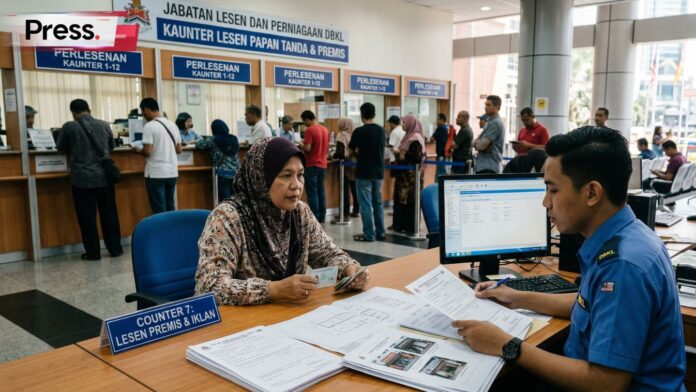
Signboard licenses are issued by Pihak Berkuasa Tempatan (PBT) or local municipal councils.
Examples include:
- DBKL (Kuala Lumpur City Hall)
- MBPJ (Petaling Jaya City Council)
- MBSJ (Subang Jaya City Council)
- MBSA (Shah Alam City Council)
Your business location determines the authority responsible for approval.
Step 2: Prepare Required Documents
Most councils require the following documents:
- Company registration (SSM documents)
- Business premise license
- Signboard design artwork
- Signboard measurements and specifications
- Photographs of premises
- Landlord consent letter (if applicable)
- Applicant identification documents
Some councils may also require:
- Contractor details
- Structural drawings
- Building approval plans
Preparing these documents early helps avoid delays.
Step 3: Ensure Bahasa Malaysia Compliance
Many local councils require Bahasa Malaysia on signboards and often require it to be the most prominent language. Exact requirements differ by council, so check the applicable by-laws/guidelines before finalizing artwork. Common compliance issues include:
- Bahasa Malaysia text not presented prominently (placement/visibility rules vary by council).
- Incorrect spelling/grammar.
- Artwork not matching the dimensions/specifications submitted for approval.
Failure to comply with language requirements is a common reason for rejection.
Step 4: Submit Application to Local Council
Applications can typically be submitted:
- Online via council portal
- Over the counter
- Through licensing consultants
- Through signboard contractors
Processing time varies depending on the local council, application completeness, and whether additional review (e.g., technical/structural checks or site inspection) is required.
Apply early especially if your opening date is fixed so signage approval doesn’t become a last-minute bottleneck.
Step 5: Pay License Fees
Signboard license fees vary based on:
- Signboard size
- Location
- Type of signage
- Duration of license
Signboard licence fees are set by the local council and usually depend on factors such as:
- Sign type (e.g., non-illuminated vs illuminated)
- Size (often measured by area)
- Location and placement
- Licence period and any applicable deposits
Because fee schedules vary by council, refer to the relevant council’s published schedule/conditions when estimating cost.
Step 6: Install Signboard After Approval
Businesses should only install signboards after receiving approval.
Installing before approval may lead to:
- Enforcement action
- Removal orders
- Additional penalties
Waiting for approval ensures compliance and avoids costly rework.
Read more:Trading License Malaysia: Step-by-Step Guide & Requirements
Common Reasons Signboard Applications Get Rejected
Understanding common rejection reasons helps businesses avoid delays.
Common Rejection Checklist
- Missing Bahasa Malaysia wording
- Signboard exceeds size limits
- Incomplete documentation
- No landlord approval
- Incorrect premises address
- Design not compliant with council guidelines
- Unapproved signboard type
Reviewing these factors before submission significantly improves approval success.
How Long Does It Take to Get a Signboard License?
Approval timelines vary depending on:
- Local council workload
- Documentation completeness
- Signboard complexity
- Location regulations
Approval time varies based on:
- Local council workload
- Documentation completeness
- Signboard complexity and whether extra technical review is required
For smoother planning, submit early and avoid last-minute artwork changes that can trigger re-submission.
Signboard License vs Business License: What’s the Difference?
Many business owners confuse these two licenses.
Business Premise License:
- Required to operate business legally: A business premise license legally allows businesses to operate from a registered physical location.
- Covers business activity: Specifies permitted business activities conducted at premises, ensuring compliance with local council regulations.
Signboard License:
- Required to display signage: A signboard license allows businesses to legally install and display signage at premises.
- Covers advertising and branding: Regulates business signage design, size, language, and placement for advertising compliance.
Both licenses are often required separately.
Do Franchise Businesses Need Signboard Licenses?
Yes. Franchise businesses typically still require local council approval.
Even though brand guidelines are standardized:
- Each outlet requires local council approval
- Signage size may need modification
- Language requirements still apply
Franchise businesses often face delays if brand templates are not compliant.
Real-World Compliance Risks in Malaysia
Many businesses install signage first and apply later. This approach carries risks:
- Councils may issue enforcement notices
- Signboards may be removed without notice
- Businesses may face fines
- Opening delays may occur
Applying early reduces compliance risk.
Why SMEs Often Struggle With Signboard License Applications
Common challenges include:
- Different council requirements
- Documentation confusion
- Language compliance issues
- Timeline uncertainty
- Contractor miscommunication
This creates demand for practical compliance guidance.
Solution: How SMEs Can Simplify Signboard License Applications
SMEs can reduce delays and rejection risks by following a structured signboard license preparation approach:
Identify the Correct Local Council
Confirm the responsible municipal authority (e.g., DBKL, MBPJ, MBSJ) based on business location.
Prepare Complete Documentation
Gather business registration, premise license, signboard design, measurements, and landlord consent.
Ensure Bahasa Malaysia Compliance
Check language requirements, font size rules, and wording placement before submission.
Align Timeline with Renovation Schedule
Apply early to avoid delays during business opening.
Coordinate with Signboard Contractor
Confirm design specifications match local council signage regulations.
Following this approach helps SMEs improve approval success, reduce compliance risks, and ensure smoother business launch timelines.
When Should You Apply for a Signboard License?
Best practice:
Apply after:
- Securing premises: Apply after confirming business location to ensure correct local council jurisdiction and requirements.
- Finalizing signage design: Submit finalized signboard design to avoid reapplication due to size or language changes.
- Confirming contractor: Confirm contractor specifications to ensure signboard measurements comply with council guidelines.
But before:
- Renovation completion: Apply before renovations finish to avoid delays installing signage after approval.
- Business opening: Apply early to ensure signboard approval before official business launch.
This ensures smooth launch timelines.
Conclusion: Why Signboard Compliance Matters for Business Visibility
Applying for a signboard license is an important step for businesses opening physical locations in Malaysia. Proper compliance helps businesses avoid fines, prevent delays, and ensure smooth operations. With different local council requirements, early preparation and proper documentation significantly improve approval success.
Beyond compliance, businesses should also focus on visibility and brand awareness. Once your signboard is approved and installed, gaining digital exposure becomes equally important.
Press.com.my helps businesses enhance brand visibility through digital PR services, content advertising, and online brand positioning. By partnering with Press.com.my, businesses can strengthen credibility, improve search visibility, and reach a wider audience.
Amplify your brand presence and maximize business exposure today.
FAQs: How to Apply Signboard License in Malaysia
1. Is a signboard license mandatory in Malaysia?
Yes, most businesses displaying external signage must obtain approval from their local municipal council before installation.
2. How much does a signboard license cost in Malaysia?
Costs vary by council and depend on sign type and size. Check the relevant local council’s published schedule of fees and conditions for the most accurate estimate.
3. How long does signboard license approval take?
Approval time varies by council workload, document completeness, and whether additional technical review is required. Apply early to reduce the risk of opening delays.
4. Can I install my signboard before approval?
No. Installing before approval may result in fines, enforcement notices, or signboard removal.
5. Do shopping mall businesses need signboard licenses?
Usually yes. Mall management approval is required, and local council approval may still apply.
6. Is Bahasa Malaysia required on signboards?
Many local councils require Bahasa Malaysia wording, often with equal or larger font size.