A liquor license in Malaysia is generally required when a business intends to sell intoxicating liquor, although the exact position depends on what is sold, how it is supplied and the rules in the relevant jurisdiction.
The main federal law is the Excise Act 1976 [Act 176]. Section 32 states that a person cannot generally sell intoxicating liquor by retail, whether for consumption on or off the premises, except under and in accordance with the relevant license.
For business owners, liquor licensing is an additional layer of authorization. Having an SSM registration, restaurant license or ordinary premises license does not automatically give a business the right to sell alcohol.
Who Needs a Liquor License?
Businesses that commercially sell or serve intoxicating liquor should determine whether licensing is required before alcohol sales begin.
This can include:
- Restaurants: Particularly where wine, spirits or cocktails are served.
- Bars And Pubs: Where alcohol sales are a core part of the business.
- Cafés: If alcoholic drinks are added to the menu.
- Hotels: Including restaurants, bars, lounges and functions.
- Supermarkets: Where liquor is sold for takeaway.
- Wholesalers: Section 33 separately regulates wholesale sales.
- Event Organisers: Temporary alcohol service may require a temporary license.
The key questions are what type of alcohol is being sold, whether it is consumed on-site or taken away, and what rules apply to that location.
Are There Different Types of Liquor Licenses?
Yes. Categories can vary by authority.
For example, DBKL currently distinguishes between several forms of liquor sales in Kuala Lumpur:
| License Category | Typical Use |
|---|---|
| Public House | Restaurants, pubs, bars and lounges |
| Wholesale | Wholesale liquor supply |
| Retail | Approved retail sales |
| Temporary License | Serving liquor during an approved event |
Separately, section 35 of the federal Excise Act 1976 also identifies a Beer House license for retail sales of beer for consumption on the premises. DBKL’s categories should therefore not be treated as a complete list of every statutory license type under federal law.
The right category matters. A restaurant serving wine by the glass operates differently from a warehouse distributing spirits to retailers or a one-day corporate function.
Read More: How to Apply Signboard License in Malaysia: Compliance Guide
Do Restaurants Need a Liquor License in Malaysia?
A restaurant that intends to sell or serve intoxicating liquor will generally need the appropriate liquor authorization.
A normal restaurant or premises license does not automatically extend to liquor sales.
In Kuala Lumpur, DBKL places restaurants, pubs, bars and lounges under its Public House category. Its published rules permit Public House liquor sales from 10:00 a.m. until midnight, with certain extensions potentially available.
If alcohol is part of the business model, liquor licensing should be considered during setup because the suitability of the premises can also affect approval.
Do You Need a License to Sell Beer?
Not always.
Section 32(1) of the Excise Act 1976 contains an exception for retail sales of beer or toddy in unopened bottles with their proper seals and capsules intact, or in unopened cans.
That does not mean every business can sell beer without further checks.
Serving opened beer for consumption on the premises is different from selling qualifying unopened cans or bottles. Local licensing policies, business type and premises restrictions may still matter.
For example, DBKL states that new retail liquor licenses have not been allowed for grocery shops, convenience stores and Chinese medicine shops in Kuala Lumpur since 1 October 2021, while its current retail category is restricted to supermarkets and hypermarkets.
The safer interpretation is that certain unopened retail beer sales receive a federal exception, but businesses should still confirm their local regulatory position.
How Do You Apply for a Liquor License in Malaysia?
There is no single application procedure that applies identically throughout Malaysia.
The Excise Act provides the federal legal framework, while licensing administration and local conditions depend on the relevant authority.
How Does It Work in Kuala Lumpur?
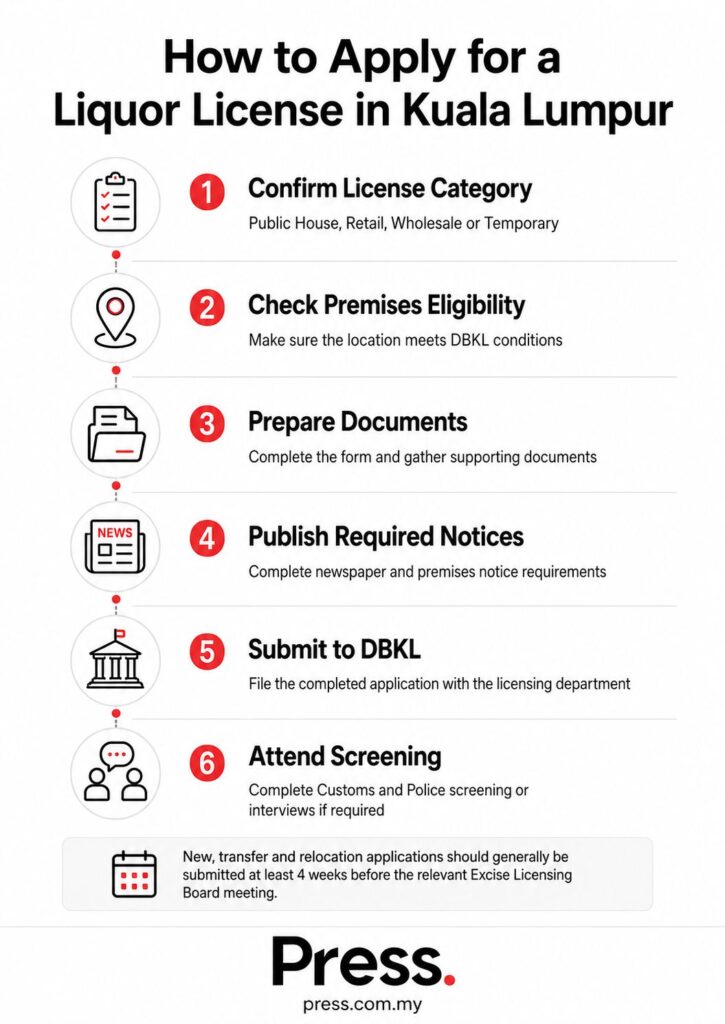
For Kuala Lumpur, the broad DBKL process is:
- Confirm Your Business Activity: Determine whether you are operating as a Public House, retailer, wholesaler or temporary event operator.
- Check Premises Eligibility: Make sure the location complies with the relevant conditions.
- Prepare The Application: Complete the required form and supporting documents.
- Complete Public Notice Requirements: Publish and display the required notices.
- Submit The Application: File the completed materials with DBKL.
- Attend Required Screening: Applicants may need to attend Customs and Police screening or interviews.
DBKL also states that new, transfer or relocation applications should be submitted at least four weeks before the relevant Excise Licensing Board meeting. Renewals should be made at least four weeks before expiry.
Businesses elsewhere in Malaysia should check their own local authority’s requirements.
What Documents Do You Need for a Liquor License?
DBKL’s published requirements include the business premises license, company or business registration documents, applicant identification, passport-sized photographs, premises photographs and a location plan.
Its current live guidance also requires advertisement cuttings from four newspaper-language categories: Bahasa Malaysia, English, Chinese and Tamil. The application notice must appear for three consecutive days.
Applicants must also display an A0-sized application notice outside the premises for seven consecutive days after obtaining DBKL endorsement.
Because older DBKL guidance contains different publication requirements, applicants should confirm the latest notice format before placing advertisements.
Can Any Business Get a Liquor License?
No. Having a registered business does not guarantee approval.
DBKL currently states that applicants must be at least 21 years old and non-Muslim. Its published requirements also include conditions relating to business ownership or company board composition.
Premises
Premises are another major factor. DBKL states that liquor-selling premises must operate from permitted building types such as hotels, commercial complexes or shop houses. Its current guidance also states a 100-metre separation requirement from residential areas and prohibits locations facing police stations, places of worship, schools and hospitals.
Wholesale liquor sales are restricted to stores or warehouses, while DBKL’s current retail category is restricted to supermarkets and hypermarkets.
Because older DBKL guidance phrases some location conditions differently, businesses should confirm how the latest criteria apply to a proposed site before committing to a lease or major renovation.
How Much Does a Liquor License Cost in Malaysia?
There is no single nationwide fee.
DBKL currently publishes these rates for Kuala Lumpur:
| DBKL License Type | Published Fee |
|---|---|
| Public House | RM110 per month |
| Wholesale | RM45 per month |
| Retail | RM35 per month |
| Temporary License | RM30 per day |
These are Kuala Lumpur rates only.
Businesses may also face additional costs for premises licensing, document preparation, required notices and compliance with premises conditions.
What Rules Apply After You Get a Liquor License?
A liquor license normally comes with conditions governing when, where and how alcohol may be sold. In Kuala Lumpur, for example, DBKL publishes these sales hours:
Public House: 10:00 a.m. to midnight, subject to approved extensions.
Wholesale And Retail: 7:00 a.m. to 9:00 p.m.
Temporary License: According to the approved event conditions.
DBKL also lists conditions relating to customer age, religious restrictions and permitted forms of sale.
At federal level, section 34 of the Excise Act regulates where licensed sellers may keep or store duty-paid liquor.
Read More: How to Apply for a Halal License in Malaysia
Can You Get a Temporary Liquor License for an Event?
Yes, temporary licensing may be available for events.
DBKL provides a Temporary License for serving liquor during an approved activity or event. Its published fee is RM30 per day, while serving times depend on the approval granted.
This may apply to corporate events, weddings, festivals and private functions where alcohol is sold or supplied in circumstances requiring licensing.
Organisers should check the requirements before confirming alcohol service arrangements.
What Happens If You Sell Alcohol Without the Required License?
Selling intoxicating liquor outside the applicable licensing framework can expose a business to enforcement action.
Section 76 of the Excise Act 1976 provides that a person who sells intoxicating liquor otherwise than in accordance with a license issued under subsection 35(1) may, upon conviction, face a fine of up to RM50,000.
The RM50,000 maximum reflects the amendment introduced by the Excise (Amendment) Act 2018, which increased the previous RM5,000 limit.
Businesses may also face local authority enforcement relating to licensing conditions or premises operations.
If alcohol sales form part of the business model, the licensing position should be confirmed before trading begins.
What Should You Check Before Applying?
Before applying, focus on three things.
First, identify the exact type of sale you intend to carry out. Serving cocktails in a bar is different from wholesaling wine or selling sealed products from a supermarket.
Second, check whether your premises are eligible for the relevant category.
Third, confirm the current forms, fees, notice requirements, permitted hours and application process with the authority responsible for your location.
Getting Liquor Licensing Right
Getting a liquor license in Malaysia involves both the federal framework under the Excise Act 1976 and the practical licensing conditions applied in the relevant jurisdiction.
Restaurants, bars, hotels, retailers, wholesalers and event operators should establish their exact licensing position before selling or serving liquor.
Licensing is also a reputational issue, especially for hospitality and consumer-facing businesses. PRESS PR Agency can help businesses communicate launches, events and regulated offerings clearly through our professional PR strategies. Contact us today to learn more!
Disclaimer: This article is for general informational purposes only and does not constitute legal advice. Liquor licensing requirements can differ by jurisdiction and may change. Businesses should confirm current requirements with the relevant licensing authority, Royal Malaysian Customs Department or a qualified professional before acting.
Sources
- Royal Malaysian Customs Department: Excise Act 1976 [Act 176].
- Royal Malaysian Customs Department: Excise (Amendment) Act 2018 [Act A1581].
- Royal Malaysian Customs Department, MyExcise: Current excise legislation and guidance.
- Dewan Bandaraya Kuala Lumpur: Current liquor licensing guidance covering eligibility, documents, premises conditions, sales hours and fees.
Frequently Asked Questions About Getting a Liquor License in Malaysia
Do You Need a License to Sell Alcohol in Malaysia?
Generally, yes. Section 32 of the Excise Act requires retail sales of intoxicating liquor to be conducted under the appropriate license unless a statutory exception applies. Local authority requirements may also apply.
Do Restaurants Need a Liquor License in Malaysia?
A restaurant that sells or serves intoxicating liquor will generally need the appropriate authorization. An ordinary restaurant or premises license does not automatically authorize liquor sales.
Do You Need a License to Sell Beer in Malaysia?
Not in every circumstance. Section 32 contains an exception for retail sales of beer or toddy in properly sealed unopened bottles or unopened cans. Local rules and the way the beer is sold can still affect licensing requirements.
How Much Is a Liquor License in Malaysia?
There is no single nationwide fee. In Kuala Lumpur, DBKL currently publishes monthly fees of RM110 for Public House, RM45 for Wholesale and RM35 for Retail licenses, while a Temporary License is RM30 per day.
Can You Get a Temporary Liquor License for an Event?
Yes, depending on the relevant authority. DBKL offers a Temporary License for serving liquor during approved activities or events in Kuala Lumpur.
Where Do You Apply for a Liquor License in Malaysia?
The application route depends on the location. In Kuala Lumpur, liquor licensing is administered by DBKL’s Department of Licensing and Business Development.