
Key Takeaway
- Reformer Pilates is strength + stability training, not just stretching.
- It can help balance and postural control, especially in older adults, though evidence certainty varies.
- In Malaysia, reformer Pilates typically costs RM60–RM85 per class in packages, RM90–RM130 for drop-ins, and RM250–RM400 for private sessions, with extra costs like grip socks, strict cancellation policies, and package expiry periods affecting the real price.
- If your goal includes heart fitness, pair Pilates with aerobic activity to meet weekly targets (150–300 minutes/week).
- People with significant pain, recent injury, or dizziness should start slower and consider medical advice first
Table of Contents
ToggleReformer Pilates is a low-impact workout using a spring-based reformer machine to build strength, control, and mobility, often beginner-friendly when taught properly and progressed gradually.
What Is Reformer Pilates?
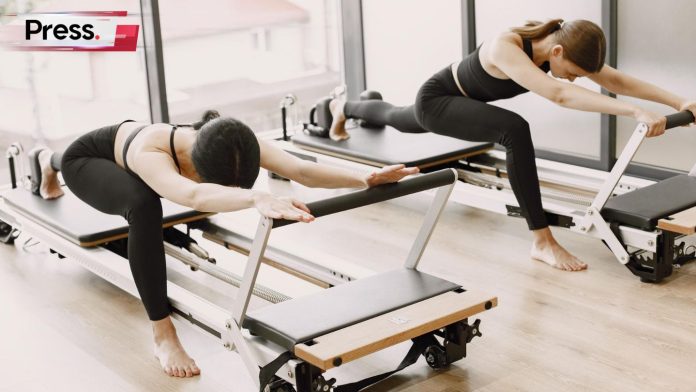
Reformer Pilates uses a moving carriage and adjustable springs to create resistance, support, and instability, so you train strength and control at the same time.
Unlike mat Pilates (which relies mostly on bodyweight), the reformer’s springs can make movements:
- Easier (more support, lighter spring)
- Harder (more resistance, more stability demand)
That’s why reformer Pilates is often marketed as beginner-friendly, but it only stays “safe and low-impact” when technique and load are matched to the person.
Heavier springs don’t mean better results—control does.
Who Is Reformer Pilates For in Malaysia?
Most Malaysians choose reformer Pilates for strength, posture, flexibility, and a joint-friendlier training option—especially if gym workouts feel intimidating or “too impact-heavy.”
It may fit you if you:
- Want structured strength training without heavy barbells
- Sit long hours (office / driving) and want better movement control
- Prefer coached sessions and clear progressions
Health Benefits: Beyond Just “Toning”
The aesthetic benefits of “long, lean muscles” are secondary to the functional medical benefits.
1. Posture Correction for Office Workers
Many Malaysians suffer from “Tech Neck” and tight hip flexors due to long hours of sitting and driving. Reformer exercises emphasize eccentric contraction, lengthening the muscle while it is under tension. This directly counteracts the hunched posture associated with desk jobs.
2. Rehabilitation and Back Pain
Research supports Pilates for managing chronic low back pain. The machine stabilizes the pelvis (lumbopelvic stability), allowing you to strengthen the back muscles without risking strain. It is widely prescribed by physiotherapists for scoliosis management to build symmetry in the muscular structure.
3. Low Impact on Joints
Because your body weight is supported by the carriage, there is minimal impact on knees and ankles. This makes it an excellent option for:
- Post-partum mothers returning to exercise.
- Seniors requiring balance training.
- Runners looking to cross-train without adding mileage stress.
Who Should Be More Cautious (Or Get Advice First)?
If you have red flags, the safest “first step” is a slower class or a clinician-guided plan, not jumping into mixed-level sessions.
Consider medical clearance or extra coaching if you have:
- New or worsening back/neck pain, numbness, or radiating pain (sciatica-like symptoms)
- Recent surgery, fracture, or acute injury
- Severe dizziness/vertigo or you often get motion sickness (the moving carriage can trigger symptoms for some people)
- Pregnancy with complications (for uncomplicated pregnancies, exercise is generally encouraged, but modifications matter)
Reformer Pilates vs Mat Pilates vs Lagree: What’s The Difference?
These are often confused in Malaysia—knowing the difference prevents wasted money and mismatched expectations.
Feature | Reformer Pilates | Mat Pilates | Lagree (Megaformer-style) |
Main feel | Controlled strength + alignment | Controlled strength using bodyweight | Higher-intensity “muscle fatigue” style |
Equipment | Reformer machine with springs | Mat + small props | Megaformer (different system) |
Best for | Technique, control, scalable resistance | Low-cost foundation, home practice | People who specifically want intensity |
Common mistake | Going too heavy too soon | Rushing advanced moves | Assuming it’s “Pilates rehab” |
Simple decision rule: If you’re new, start with Foundations/Beginner reformer or mat fundamentals, then progress once form is consistent.
Read More: Cadillac Pilates Malaysia: Safety, Cost & Who It’s For
Does Reformer Pilates “Count” As A Full Workout?
Reformer Pilates can be a complete strength-and-mobility session, but it may not fully cover cardio fitness unless you add aerobic activity.
To align with widely used health guidance, adults are generally recommended 150–300 minutes of moderate aerobic activity per week (or equivalent).
Practical weekly setups (Malaysia-friendly):
- Option A (Balanced): 2× reformer + 2× brisk walking (30–45 min)
- Option B (Busy schedule): 2× reformer + 1× longer weekend walk/hike
- Option C (Cardio goal): 2× reformer + 2–3× cycling/jogging/swim
Malaysia’s MOH materials also emphasise building an active lifestyle and reducing sedentary time, not just “one workout type.”
What Benefits Are Evidence-Supported (And What’s Overhyped)?
Reformer Pilates is most credible as a way to improve strength, control, and balance—not as a guaranteed “fat-burning shortcut.”
What the evidence supports more consistently
- Balance improvements in older adults (but not to reduce the number of falls or the fear of falling).
- Potential reductions in pain/disability for some people with chronic low back pain, depending on programme and individual factors.
Claims to treat cautiously
- “Spot reduction” (losing fat in one area)
- “Detox” language
- “Guaranteed posture fix” in weeks (posture is multifactorial: strength, habits, ergonomics, stress)
How Much Does Reformer Pilates Cost in Malaysia?
Reformer pilates is significantly more expensive than gym memberships due to the high cost of the machines and the need for small group supervision. In Malaysia, specifically in hubs like Bangsar, Mont Kiara, and Damansara Heights, pricing follows a tiered structure.
- Drop-In (Single Class): RM90 – RM130. This is the most expensive option and is generally not recommended unless you are testing a studio.
- Class Packages (10-20 Classes): RM60 – RM85 per class. Buying in bulk is the standard way to reduce costs.
- Private One-on-One: RM250 – RM400 per session. Recommended for clinical Pilates (rehab) or pre-natal clients.
- Hidden Costs:
- Grip Socks: Mandatory in 99% of Malaysian studios for hygiene and safety. Cost: RM20 – RM40 per pair.
- Cancellation Fees: Most studios have a strict 12-hour cancellation policy. If you cancel late, you lose the credit or pay a penalty penalty.
Note on Packages: Always check the validity period. A 20-class package might expire in 4 months. If you travel often, a cheaper per-class rate might end up costing more if credits expire unused.
How To Start Reformer Pilates Safely (Beginner Framework)
The safest progression is “technique first, load later”, your first 2–4 weeks should feel controlled, not crushed.
Step 1: Choose the right class label
Many Malaysian studios use labels like:
- Foundations / Beginner / Reformer Fundamentals → best starting point
- Mixed Level → only if you already understand cues and can self-modify
- Private → best if you have pain history, are nervous, or want faster skill acquisition
Step 2: Use a simple readiness checklist
You’re in the right level if you can:
- Keep breathing steady (not holding breath)
- Control the carriage without slamming
- Feel effort in target muscles without sharp joint pain
Step 3: Progress with one variable at a time
Change only one per week:
- spring resistance or range of motion or speed or complexity
Top Reformer Pilates Studios in Malaysia (with Locations & Approx Prices)
Here’s a snapshot of popular reformer Pilates studios across Kuala Lumpur and nearby areas, including primary locations, approximate price per class, and what they’re best known for. Prices are estimates from current available listings and typical local ranges (RM50–RM110 per session; private classes may cost more).
Studio | Primary Locations | Approx. Price (Per Class)* | Best For |
Pilates Collective – Mont Kiara | Mont Kiara, KL | ~RM60–RM80 (group) | Accessible classes & beginner-friendly |
Pilates Collective – Bangsar | Bangsar, KL | ~RM60–RM80 (group) | Wide schedule & strong community vibe |
Pilates Collective – Sri Petaling | Sri Petaling, KL | ~RM60–RM80 (group) | Convenient suburban branch |
Urban Spring Pilates LINC, Kuala Lumpur | The LINC, Tun Razak, KL | ~RM80–RM100 | Well-equipped studio with varied reformer classes |
Serene Pilates | Kampung Datuk Keramat, KL | ~RM80–RM100 | Boutique vibe & personalised cues |
Hills Pilates – Bukit Jalil City | Bukit Jalil City, KL | ~RM80–RM100 | Friendly environment & supportive instructors |
Pilatique Pilates & Physiotherapy Studio | Damansara Heights, KL | ~RM90–RM110 | Pilates + physiotherapy integration |
The Pilates Era | Cheras, KL | ~RM70–RM100 | Balanced classes for all levels |
Feel Good Pilates | Taman Desa, KL | ~RM70–RM90 | Relaxed small-group sessions |
52 Pilates @ Star Boulevard, KLCC | KLCC area | ~RM80–RM100 | Central location & accessible classes |
Other Notable Options
- STEPS Pilates KL Eco City – Excellent for learners near Bangsar/Eco City with steady class flow.
- SoPilates Studio – Setapak / SoPilates Studio – KL Gateway Mall – Boutique local Pilates options with focused reformer sessions.
- Kore Studio – Great for form and body awareness work.
- La Pilates KL | Yoga & Pilates & luluto Pilates Studio Mont Kiara – Quiet, personalised studios with reformer flow classes.
- Waves Pilates – Community-focused studio in north KL.
Approx prices based on class packs or single sessions, actual rates vary by studio, instructor experience, and whether it’s group vs private. Typical group reformer prices in KL range RM50–RM100 per session.
Do’s and Don’ts When Starting Reformer Pilates
Most reformer Pilates issues—ineffective results or minor injuries—come from rushing, overloading, or treating the reformer like a gym machine rather than a control-based system.
Do These Instead
- Do prioritise control over resistance.
Start with lighter springs until you can guide the carriage smoothly and silently, strength and stability come from control, not heavier resistance. - Do start with Foundations or Beginner classes.
Even if you lift weights or attend HIIT classes, reformer Pilates challenges balance and coordination differently. Technique comes first. - Do move slowly and with awareness.
Controlled tempo helps you maintain alignment and reduces strain on joints and connective tissue. - Do follow breathing cues.
Inhale through the nose and exhale through the mouth as instructed to support core engagement and movement control. - Do wear fitted, functional activewear.
Close-fitting clothing reduces the risk of fabric catching in springs or rails and allows instructors to see and correct your form. - Do listen closely to your instructor.
Reformer classes are intentionally small so instructors can cue posture, rib position, and spinal alignment. These corrections are central to the method. - Do combine reformer Pilates with light cardio if overall fitness is your goal.
Walking, cycling, or swimming helps meet weekly cardiovascular activity targets.
Don’t Do These
- Don’t choose heavy springs just to “feel more burn.”
Excess resistance often leads to poor form and joint strain, especially for beginners. - Don’t use momentum or “muscle through” movements.
If the carriage slams or bangs at the end of a movement, control has been lost—and the exercise has missed its purpose. - Don’t skip beginner classes because you’re already fit.
Strength from the gym does not automatically translate to reformer control or stability. - Don’t hold your breath during exercises.
Breath-holding increases tension and reduces effective core engagement. - Don’t ignore dizziness, nausea, or discomfort.
The moving carriage can trigger motion sensitivity in some people. Slow down, stabilise your gaze, or ask for modifications. - Don’t assume reformer Pilates alone replaces all other exercise.
It builds strength and mobility well, but it doesn’t always meet cardiovascular fitness needs on its own. - Don’t tune out verbal cues.
Ignoring instructions like “neutral spine” or “rib control” turns a precision-based session into generic movement.
Summary: How To Decide If Reformer Pilates Is Worth It
Reformer Pilates is “worth it” if you want coached, scalable strength and better movement control—and you choose the right entry level, not the hardest class.
If you’re deciding today:
- Choose Foundations/Beginner for your first month
- Budget based on group vs private (not promo headlines)
- Pair it with aerobic activity if overall health/fitness is the goal
For more info, follow PR agency Malaysia.
Disclaimer: All of the content was thoroughly fact-checked and verified by our editorial team to ensure accuracy, clarity, and reliability.
Legal Disclaimer: All brand names, trademarks, and logos displayed on this website are the intellectual property of their respective owners. Their use herein is solely for identification purposes without written consent or direct affiliation from the respective owner.
FAQs About Reformer Pilates in Malaysia
Can men do reformer pilates?
Absolutely. It was invented by a man (Joseph Pilates) for war rehabilitation. Many top athletes use it for core conditioning.
How many times a week should I do it?
Most people do well with 2–3 sessions/week for skill and strength; add aerobic activity if you want cardiovascular benefits.
Can reformer pilates help back pain (sakit belakang)?
It may help some people with chronic low back pain, but outcomes vary, pain that worsens or radiates should be assessed first.
Why do I feel dizzy on the reformer?
Some people react to the moving carriage (motion-sickness-like effect) or position changes, slow transitions and modifications usually help.
Can I do reformer pilates if I’m pregnant?
Many with uncomplicated pregnancies can stay active, but you’ll need modifications and should follow your clinician’s advice.
Will I lose weight with reformer pilates?
It will reshape your body and build muscle, which increases metabolism. However, for rapid weight loss, it should be combined with cardio and a calorie deficit. It is primarily for strength and toning.