
Key Takeaway
- Bouldering does not require ropes, harnesses, or prior experience
- Most Malaysian beginners start with zero climbing background
- Injury risk is low when sessions are paced properly
- Entry costs are comparable to boutique fitness classes
- Suitable for teens, adults, and casual exercisers
Table of Contents
ToggleBouldering is a form of indoor rock climbing done on short walls without ropes, relying on thick padded mats for safety, and is suitable for most Malaysians, including beginners with no climbing experience.
What Is Bouldering?
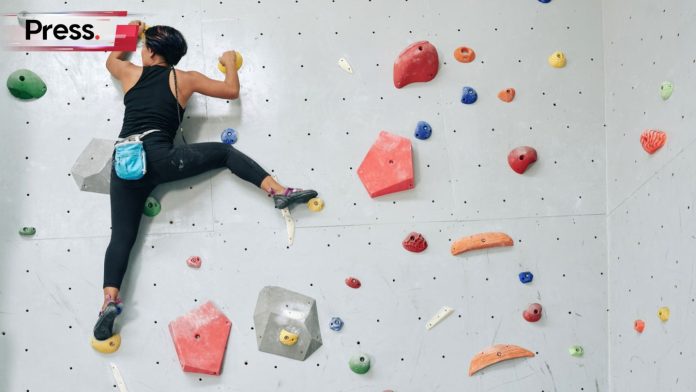
Bouldering is a style of rock climbing performed on short walls, typically under five metres, without ropes.
Instead of harnesses, climbers land on thick crash mats, making it accessible and controlled.
Each climb, called a “problem” because they require solving a physical puzzle to reach the top.
“Bouldering requires movement and balance, technique and problem-solving, not strength and endurance.”
Unlike outdoor climbing, indoor bouldering gyms standardise routes and safety conditions, which is why most Malaysians first encounter bouldering indoors.
How Is Bouldering Different From Other Types of Climbing?
The main difference is height, equipment, and learning curve.
Aspect | Bouldering | Rope Climbing |
Wall height | Short | Tall |
Ropes & harness | Not used | Required |
Safety system | Crash mats | Belayer + rope |
Beginner learning curve | Faster | Slower |
Focus | Movement & technique | Endurance & height management |
Unlike other types of rock climbing, bouldering removes the fear of height and the need for complex equipment.
Is Bouldering Suitable for Malaysians?
Yes, most Malaysians can try bouldering safely, even without an athletic background.
It is commonly suitable for:
- Adults looking for a non-traditional workout
- Teenagers (with supervision)
- Office workers seeking strength and mobility training
- People bored with conventional gyms
Those who should proceed cautiously:
- Individuals with recent wrist, finger, or shoulder injuries
- People with balance disorders
- Anyone returning from long inactivity (should pace sessions)
Is Bouldering Safe for Beginners?
Bouldering is considered low-risk when done indoors and at beginner levels.
Most beginner injuries are:
- Finger strain
- Elbow or shoulder overuse
- Minor slips, not high-impact falls
Falls are short and controlled. The bigger risk is doing too much too soon, not falling.
Do You Need to Be Fit or Strong to Start?
No. Strength develops as you climb.
Beginner routes are designed to teach:
- Foot placement
- Balance
- Body positioning
Many first-timers are surprised that technique matters more than raw strength.
Common Misconceptions About Bouldering
- “You need upper body strength” → Technique matters more
- “It’s dangerous” → Indoor bouldering is controlled
- “It’s only for young people” → Many climbers start in their 30s or 40s
- “You’ll fall a lot” → Beginner routes minimise risky moves
Why Bouldering is Trending in Malaysia
The sport has exploded in popularity across the Klang Valley due to its community aspect and “gamified” fitness approach.
For many Malaysians, traditional gyms can feel repetitive. Bouldering offers a social alternative where people sit on the mats, discuss “beta” (the method to solve a climb), and cheer each other on. It is a full-body workout that builds back strength, grip, and core stability without feeling like a chore.
Additionally, the rise of aesthetic, air-conditioned gyms like Bump Bouldering and Camp5 has made it a comfortable escape from the Malaysian heat.
Gear: What Do You Actually Need?
You do not need to buy expensive equipment for your first few months.
- Climbing Shoes (Kasut Climbing): Rental shoes are stiff and tight to help you stand on small footholds.
- The Malaysian Rule: Unlike professional climbers who wear shoes barefoot for sensitivity, almost all Malaysian gyms require you to wear socks with rental shoes for hygiene purposes. Bring thin sports socks.
- Chalk (Magnesium Carbonate): Malaysia is humid. Your hands will sweat. Chalk dries your hands to ensure you don’t slip off the holds. You can rent a chalk bag at the counter.
- Comfortable Clothing: Wear breathable sportswear. Long pants or leggings are recommended to protect your knees from scrapes (known as “wall rash”) against the textured walls.
How Much Does Bouldering Cost in Malaysia?
Expect to spend between RM40 to RM70 for your first session, inclusive of gear rental.
Pricing varies significantly depending on whether you visit a premium commercial gym or a government-subsidized facility.
Expense Category | Estimated Cost (Commercial Gym) | Notes |
Day Pass (Entry) | RM 35 – RM 55 | Usually allows entry for the whole day. |
Registration Fee | RM 5 – RM 10 | One-time fee for new climbers (admin/card). |
Shoe Rental | RM 5 – RM 10 | Mandatory if you don’t own climbing shoes. |
Chalk Bag Rental | RM 3 – RM 5 | Optional, but recommended for sweaty hands. |
Total First Visit | RM 48 – RM 80 | Bring your own socks to save money. |
Pro Tip: Government facilities like the Putrajaya Challenge Park are significantly cheaper (approx. RM6 entry), but they are semi-outdoors and often lack air conditioning.
What Should Beginners Expect in Their First Session?
Expect confusion, quick fatigue, and fast learning.
Common first-time experiences:
- Difficulty gripping holds
- Rapid forearm fatigue
- Improvement within the same session
Most beginners climb for 60–90 minutes.
Health And Fitness Benefits Of Bouldering
Physical Benefits
Builds functional, full-body strength
Bouldering engages the legs, core, back, shoulders, and forearms simultaneously, developing strength patterns that carry over into everyday movement.
Provides cardiovascular stimulation without impact
Indoor climbing can raise heart rates to moderate–high levels, with a typical session burning several hundred calories depending on intensity and rest.
Improves grip strength, balance, and mobility
Regular climbing strengthens the forearms and fingers while encouraging controlled movement, joint mobility, and coordination.
Mental And Psychological Benefits
Combines exercise with problem-solving
Each route requires planning and adaptation, offering cognitive engagement beyond repetitive workouts.
May support mental well-being
Clinical research suggests structured bouldering programmes can reduce depressive symptoms more effectively than exercise alone.
Builds confidence and relieves stress
Clear progression and focused movement help develop self-efficacy and provide mental relief from daily stressors.
Top Bouldering Gyms in Malaysia (Beginner-Friendly)
Malaysia has a growing indoor climbing scene, with bouldering gyms available in major cities and regional hubs. The gyms below are commonly recognised for accessibility, beginner route setting, and safety standards.
Listed alphabetically, not ranked. Beginner suitability may vary by outlet, check route grading and introductory sessions before visiting.
Batuu Climbing Gym (Petaling Jaya)
A well-established gym known for structured route setting and consistent grading. Batuu offers a balanced mix of beginner and intermediate problems, making it suitable for first-timers who want a less intimidating environment.
Best for: Beginners who prefer a quieter, skill-focused setting.
Camp5 Climbing Gym (Multiple Locations)
Often considered the largest climbing gym operator in Malaysia, Camp5 locations (including 1 Utama and KL Eco City) feature extensive bouldering areas alongside high-wall rope climbing. Facilities are fully air-conditioned and professionally managed.
Best for: Beginners who want variety and a polished gym experience.
Common Ground Climbing Gym (Petaling Jaya)
A community-oriented gym with creative problem setting and a strong local climbing culture. While smaller than chain gyms, it offers approachable beginner routes and a supportive atmosphere.
Best for: New climbers who value community and interaction.
Evolve Climbing Gym (Ara Damansara)
One of the most popular bouldering gyms in the Klang Valley, Evolve is known for modern facilities, clear grading, and frequent route resets. Beginner-friendly zones are clearly marked.
Best for: First-timers seeking a clean, modern, and well-organised gym.
Jungle Gym (Shah Alam)
A more casual climbing space with a relaxed vibe. Jungle Gym often attracts recreational climbers and families, with less crowded sessions outside peak hours.
Best for: Casual beginners and off-peak climbers.
Madmonkeyz Climbing Gym (Penang)
One of Penang’s best-known climbing gyms, offering solid beginner routes and rental options. It serves as a key entry point for northern region climbers.
Best for: Beginners in Penang looking for an all-in-one gym.
Project Rock (Kuala Lumpur)
A centrally located gym with compact but challenging route design. While it caters more to intermediate climbers, beginner routes are available and well-marked.
Best for: Beginners who want gradual progression in a city setting.
Rockworks Climbing Gym (Kuala Lumpur)
Rockworks combines bouldering and rope climbing with a technical focus. Beginner problems emphasise footwork and balance rather than brute strength.
Best for: Beginners interested in learning proper climbing technique early.
Skywalker Climbing Gym (Johor Bahru)
A key climbing destination in Johor, offering spacious layouts and beginner-accessible walls. Popular with weekend climbers and families.
Best for: Beginners in Southern Malaysia.
The Top Rope Gym (Klang Valley)
As the name suggests, this gym focuses more on rope climbing but includes bouldering sections suitable for beginners who want to try both styles.
Best for: First-timers curious about both bouldering and rope climbing.
Notable Bouldering Gyms in the Klang Valley
For readers specifically searching within Greater Kuala Lumpur, these gyms are frequently mentioned due to their accessibility and distinct positioning.
Bump Bouldering (Jaya One, Pavilion Bukit Jalil)
A bouldering-exclusive gym known for premium aesthetics and social appeal. Routes are beginner-friendly but can feel busy during peak hours.
Best for: Younger climbers and social first-timers.
Bolder Ventures (Subang)
A smaller, community-driven gym with creative route setting and a friendly atmosphere. Beginners often receive informal guidance from regulars.
Best for: Beginners who prefer a less commercial, community vibe.
Putrajaya Challenge Park
A large public climbing facility offering very affordable access. The gym is not air-conditioned, which affects comfort during hotter hours.
Best for: Budget-conscious beginners; visit early morning or evening.
Basic Etiquette & Safety
Safety in bouldering depends on spatial awareness, not equipment.
- Don’t Walk Under Climbers: This is the golden rule. If a climber falls, they will land on you. Always look up and check the wall before crossing the mats.
- Keep the Mats Clear: Do not sit, lounge, or leave your water bottle on the fall zones. If you are not climbing, step off the mats.
- Brush Your Holds: After you climb, use the provided brushes to clean the chalk off the holds. It’s polite for the next climber.
- Falling Technique: Do not try to land on your feet and stay standing. Disperse the impact: land on your feet, bend your knees, and roll onto your back.
Do’s and Don’ts for Beginner Bouldering (Malaysia)
Do
- Keep your arms relaxed and extended when possible
Allows your skeleton to support body weight, conserving energy and reducing forearm fatigue. - Use your legs to drive upward movement
Leg muscles are stronger than arms and help maintain balance, efficiency, and control on the wall. - Start with the lowest route grades (VB or V0)
Builds proper technique and grip adaptation while lowering the risk of finger and tendon strain.
Don’t
- Don’t climb with constantly bent, tense arms (“T-rex arms”)
Continuous muscle tension drains energy quickly and increases early fatigue. - Don’t rely only on upper-body pulling
Treating bouldering like pull-ups leads to faster exhaustion and poor movement efficiency. - Don’t attempt high-difficulty routes too early
Skipping beginner grades increases the risk of overuse injuries, especially to fingers and elbows.
Final Thought
Bouldering offers Malaysians a low-barrier way to build strength, coordination, and confidence outside traditional gym routines. Its indoor, beginner-friendly format makes it accessible to a wide range of ages and fitness levels, while still providing clear progression for those who continue over time.
For more info, follow PR agency Malaysia.
Disclaimer: All of the content was thoroughly fact-checked and verified by our editorial team to ensure accuracy, clarity, and reliability.
Legal Disclaimer: All brand names, trademarks, and logos displayed on this website are the intellectual property of their respective owners. Their use herein is solely for identification purposes without written consent or direct affiliation from the respective owner.
Frequently Asked Questions (FAQ) On Bouldering
Is bouldering suitable for overweight beginners?
Yes, but pacing and rest are important.
Can children try bouldering?
Many gyms allow children with height and supervision rules.
How often should beginners climb?
1–2 times per week is typical.
Do I need personal coaching?
Not required at beginner level.
Is bouldering better than gym workouts?
It depends on goals, bouldering emphasises coordination and grip strength.