
So, do gacha games count as gambling in Malaysia?
There is no completely settled legal answer. No Malaysian law specifically mentions gacha games, and there does not appear to be a reported Malaysian court decision directly ruling on whether an ordinary paid pull counts as gambling.
That makes “not clearly classified” more accurate than a simple legal yes or no.
In practical terms, however, the similarities are difficult to ignore. Players can spend real money on an uncertain result, with some rewards being far more desirable than others.
What Exactly Is a Gacha Game?
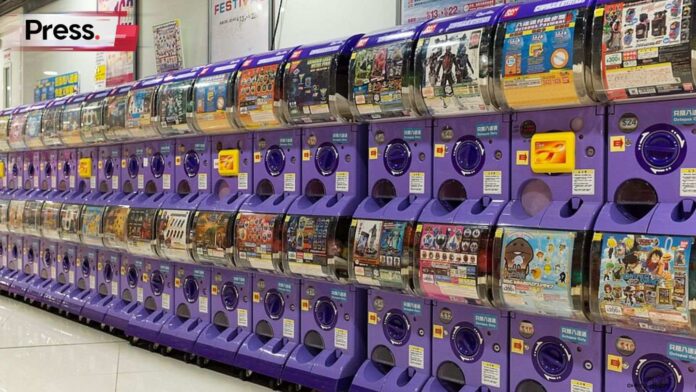
The term comes from Japan’s gachapon capsule machines.

You insert money, turn a handle and receive a random toy from a larger collection. You might get the figure you wanted, or the same unwanted one for the fifth time.
Digital gacha games use a similar system. Players spend in-game currency for a random character, weapon, costume or item. That currency may be earned through gameplay, purchased using real money or obtained through both.
Popular examples include Genshin Impact, Honkai: Star Rail, Wuthering Waves, Fate/Grand Order, Arknights and Goddess of Victory: Nikke.
Different games use terms such as summoning, wishing, recruiting and warping.
The basic idea remains the same: you exchange currency for a random result.
What Is a Pity System?
Most newer gachas include some form of “pity” or guarantee system.
After a certain number of unsuccessful pulls, the player receives a high-rarity reward. Some games also increase the odds as the player approaches that limit.
However, a guaranteed rare reward is not always the featured character. A player may reach pity, receive the wrong high-rarity character and then need to continue pulling.
Pity systems make gacha less brutal than completely unrestricted randomness. They do not remove the gamble. They mainly place a ceiling on how unlucky the player can be.
Are Gacha Games Gambling? They Certainly Feel Like It
Paid gacha resembles gambling in almost everything but the prize and its current legal treatment.
A typical pull (whether paid or free) includes three familiar elements:
- The player gives up something of value.
- Chance determines the result.
- Some outcomes are much more desirable than others.
The prize is simply a digital character or weapon rather than cash.

That does not mean every gacha game is evil, or that everyone who spends money has a gambling problem, of course.
The author of this article plays gachas too. Many have excellent stories, music, characters and combat systems, with some pretty positive messages (unity, overcoming oppression, pursuing justice in the face of overwhelming odds, etc). Plenty of people enjoy them responsibly too.
But that doesn’t make the business model harmless.
Rare animations, limited-time banners and pity counters are designed to make pulling feel exciting. The pity counter adds another temptation: you have already pulled this many times, so why stop now?
Games may also release several popular characters close together while giving players enough free currency to guarantee only one.
The player then has a choice: save for months, skip some characters, wait for a rerun or spend real money.
These systems are how gacha games earn enormous amounts from a relatively small group of heavy spenders, commonly known as “whales”.
Malaysia’s Laws Were Not Written for Gacha
Malaysia’s major federal gambling laws include the Common Gaming Houses Act 1953, the Betting Act 1953, the Lotteries Act 1952 and the Pool Betting Act 1967.
These laws were written long before app stores, premium currencies and mobile microtransactions existed.
Malaysia also does not currently have a law specifically regulating gacha games or loot boxes.
Existing gambling law uses broad concepts involving chance, prizes, money and “money’s worth”. The difficult question is whether a non-transferable digital reward counts as something of recognised value under those laws.
2023 Court of Appeal Ruling on Online Gambling
A 2023 Court of Appeal ruling confirmed that online gambling could fall under the Common Gaming Houses Act even when gambling equipment was not physically present at the premises.
However, that case concerned an online gambling operation, not a video game. It does not tell us whether an ordinary paid gacha pull would receive the same treatment.
In February 2026, the Malaysian government said it was drafting broader legislation to address illegal and online gambling. That proposal was not announced as a gacha-specific law.
For now, gacha is best described as not specifically prohibited, but not definitively declared outside gambling law either.
Why the Lack of Cash-Out Matters
The strongest argument against classifying gacha as gambling is that the rewards normally cannot be officially exchanged for money.
A rare character usually remains inside the game. It cannot be withdrawn as cash, transferred freely or officially resold. Publishers also commonly prohibit account sales.
This allows companies to argue that players are buying entertainment rather than wagering for a financial prize.
That distinction is important, but it still doesn’t answer the whole legal question. Players clearly assign value to digital rewards. Someone may save currency for months, spend hundreds of ringgit or buy an account through an unofficial marketplace to obtain a particular character.
Personal value is not necessarily the same as legal monetary value. Still, the fact that a reward cannot be converted into cash does not make it meaningless.
You Do Not Fully Own What You Buy
There is also no guarantee that purchased content will remain available forever.
If a publisher closes the game, shuts down its servers or bans an account, the characters and items connected to that account may disappear.
That issue affects many online games, not only gachas. However, it makes heavy spending on random digital items harder to justify. You may pay a large amount for something you never truly own.
How Genshin Changed the Market
Gacha games existed long before Genshin Impact, but Genshin changed what the wider market expects from them, as well as the reach of gacha games.
Many earlier gachas relied on 2D artwork, menus and simple mobile-focused gameplay loops. They weren’t bad per se, just simpler.
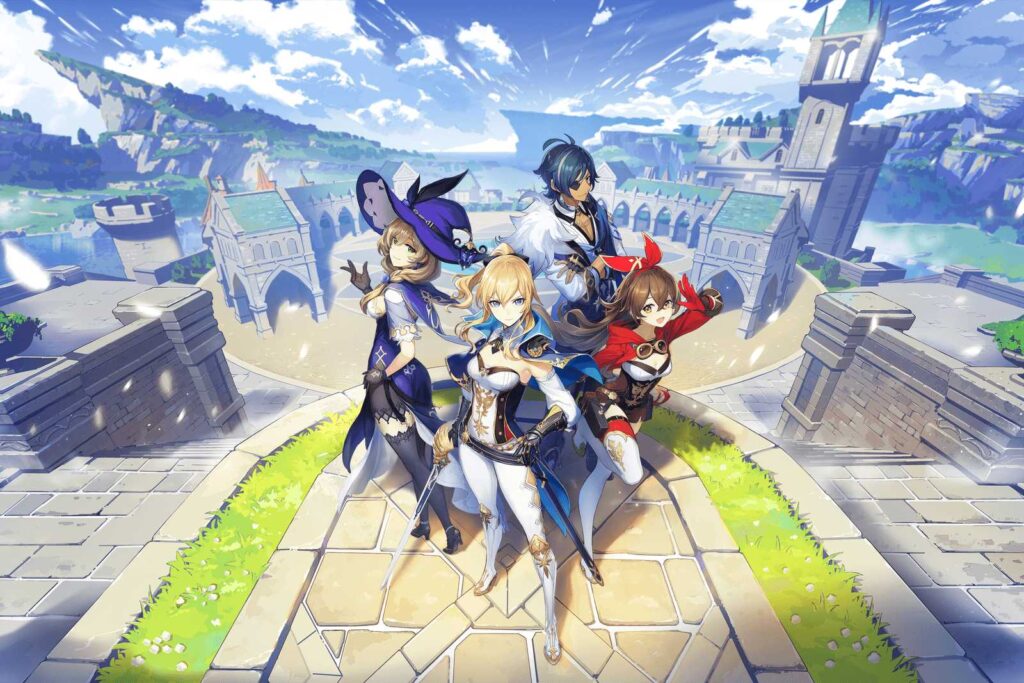
Genshin instead offered a polished 3D open world, action-based combat, cross-platform support and a presentation closer to a major console RPG.
It launched in September 2020, during the COVID-19 pandemic, when many people were spending more time indoors and looking for games they could play without paying upfront.
That timing helped, but timing alone does not explain its success.
Genshin in Numbers
According to a 2025 complaint filed by the US Federal Trade Commission, Genshin had generated more than US$4 billion from in-game digital content.
Figures presented at a 2025 Shanghai cultural-industry event also put its global reach above 300 million registrations and said around 70% of its audience was between 18 and 30 years old.
They still show the scale Genshin has achieved.
Its success also changed the competition. Newer games such as Wuthering Waves and Neverness to Everness arrived with large 3D environments and action combat, many attempting to improve on the core formula. Meanwhile HoYoverse (the Genshin developer) has continued experimenting within Genshin and through its other games like Honkai: Star Rail and Zenless Zone Zero.
On one hand, we get better games. On the other hand, the ubiquity of gachas nowadays, especially amongst younger players, raises some concerns.
Why Gacha Works So Well in Malaysia
There Is No Upfront Cost
The biggest attraction is obvious: gacha games are free to start.
Players can usually follow the story, complete quests and earn some pulling currency without spending money.
There is pressure to pay when a popular limited-time character appears, but the initial cost remains RM0.
That matters in Malaysia, where new AAA games can cost several hundred ringgit. Consoles and capable gaming PCs also require a large upfront investment.
Gacha removes that first barrier. You can download a game on a phone you already own and decide later whether to spend.
Malaysia Is Highly Mobile-Connected
The Department of Statistics Malaysia reported that individual mobile-phone usage reached 99.6% in 2025, compared with computer usage of 81.5%.
That does not prove Malaysians prefer mobile gaming over every other platform. It does show that phones are widely available and convenient, with most gachas optimized for mobile (while quite a few also offer PC clients)
A mobile gacha game can be played while commuting, waiting for food or taking a break.
Anime Culture Is Already Popular Here
There is also an obvious cultural fit. Malaysia has an active anime, manga and cosplay community, which has been around for a long time, while most major gachas use anime-inspired artwork, familiar voice actors and character-focused storytelling.
The characters are designed to build fandoms through trailers, story quests, music, merchandise, fan art and social media.
The Real Concern Is Younger Players
Gacha games are not designed exclusively for children.
Many are built around young adults and office workers (particularly in main markets like Korea, Japan, and China) who can log in briefly during their commute, complete daily tasks and leave.
However, colourful characters and dramatic reward animations naturally attract younger players too.
The real problem begins when children or teenagers gain access to saved cards, one-tap purchases, digital wallets or a parent’s app-store account.
In its case against HoYoverse, the FTC alleged that some children and teenagers spent hundreds or thousands of US dollars, sometimes without their parents properly understanding what had happened.
The company settled the case without admitting every allegation, but the broader concern is not unique to Genshin.
Virtual Currency Makes Spending Harder to Follow
Virtual currency makes prices feel less real.
When an item costs RM50, the price is obvious. When it costs 3,280 crystals, 1,600 gems or ten special tickets, the real cost is easier to ignore.
A player may need to convert ringgit into one currency, exchange it for another and then spend it on a random pull.
By that stage, the connection to real money has become much weaker.
What Parents Should Check
Parents should not only ask how much time their children spend playing.
They should also check:
- Whether payment details are connected
- Whether one-tap purchases are enabled
- Whether purchases require approval
- Whether spending notifications are active
- Whether the game sells random paid rewards
- Whether parental controls are enabled
- Whether the child understands the ringgit cost of virtual currency
A purchase password can be more useful than a lecture after the money is already gone.
Does Malaysia Need a Blanket Ban?
I don’t think Malaysia needs to ban gacha games, to be honest.
Adults should generally be allowed to spend their own money on entertainment, even when other people consider it a bad decision.
Spending RM100 on a character is not automatically less responsible than spending RM100 on a concert ticket, collectable card or expensive meal.
The problem is that gacha spending is not always presented clearly, and younger players can sometimes access it far too easily.
Malaysia would be better off introducing practical consumer protections, such as:
- Parental approval for purchases made by minors
- Ringgit prices displayed beside virtual currencies
- Clear probability and pity information
- Monthly spending summaries
- Optional spending limits
- Cooling-off periods before limits can be removed
- Better refund procedures for unauthorised purchases
These measures won’t stop adults from playing. They would simply make the system easier to understand and harder for children to misuse.
What Other Countries Have Done
Belgium
Belgium took one of the strictest approaches.
In 2018, its Gaming Commission concluded that certain paid loot-box systems met the country’s definition of a game of chance. Electronic Arts, a giant game studio later stopped selling FIFA Points in Belgium.
That approach may be too blunt for Malaysia. Treating every paid random reward like casino gambling could simply push games out of the market.
United States
The United States took a more consumer-focused approach in its case against HoYoverse. The company agreed to pay US$20 million and restrict purchases by children under 16 without parental consent.
The FTC also raised concerns about odds, marketing and the way virtual currencies made real costs harder to understand.
It did not declare that every gacha game was legally gambling. It focused on whether consumers, especially children, were being misled or allowed to spend without proper safeguards.
That feels like a more useful direction for Malaysia.
China
China provides a warning about going too far.
Draft online-game rules announced in December 2023 included spending controls and heavy restrictions (even proposed outright bans) on certain login and repeated-purchase rewards.
The announcement triggered large falls in Tencent and NetEase shares, with up to $80 billion in market valuation lost. The draft was removed from the regulator’s website the following month, and Bloomberg and Business Insider reported that the government official in charge of this was fired. Yes, fired.
Regulation is not impossible, but it does need to be introduced carefully. Not because I’m afraid of any ministers getting fired, but just to avoid any severe economic backlash.
Gachas Aren’t Inherently The Issue
So, do gacha games count as gambling in Malaysia? There is no clear gacha-specific legal classification. Malaysia does not currently have a law expressly declaring ordinary paid pulls to be gambling. However, it would also be too strong to say they have been definitively ruled outside gambling law.
In practical terms, paid gacha still resembles gambling in several important ways. You spend money on an uncertain result and hope for a rare reward.
The fact that the reward is a fictional character rather than cash changes the legal argument, but it does not remove the excitement, disappointment or temptation to spend again. That does not mean every gacha should be banned or every player treated like a problem gambler, of course.
Most people can enjoy these games without losing control, and many of the games themselves are genuinely well made.
What Malaysia needs is a more honest conversation about the business model. Adults can make their own choices, but prices should be transparent, spending should be easy to track and children should not be able to make repeated random purchases without meaningful protection.
Disclaimer: This article is intended for general informational and commentary purposes only. It does not constitute legal, financial, medical or gambling-related advice. Malaysian laws and regulations may change, and the legal status of gacha games has not been definitively settled by a Malaysian court. Readers should seek advice from a qualified Malaysian legal professional for guidance on specific circumstances.
This article was written by Samuel Ang on the 26th of June 2026, and all facts are up to date as of the time of writing. I play a wide variety of games, both gacha and non-gacha, as I like trying out all sorts of genres.
Sources
- Attorney General’s Chambers of Malaysia, Federal Legislation Portal
- One Asia Lawyers, “Navigating ‘Play to Earn’ and NFTs Within Malaysia’s Legal Framework”, February 2024
- Malay Mail, “Appeals Court Rules Online Gambling an Offence Under Common Gaming Houses Act 1953”, 18 October 2023
- New Straits Times, “Government Drafting Bill to Address Online Gambling”, 15 February 2026
- Department of Statistics Malaysia, ICT Use and Access by Individuals and Households Survey Report 2025
- US Federal Trade Commission, Cognosphere Complaint, 17 January 2025
- US Federal Trade Commission, HoYoverse Settlement Announcement, 17 January 2025
- Niko Partners, East Asia Gamer Market Report, 31 July 2025
- Belgian Gaming Commission, Research Report on Loot Boxes, 2018
- Electronic Arts, “FIFA Points in Belgium”, January 2019
- Reuters, “China Regulator Removes Draft Video Game Rules from Website”, 23 January 2024
- Bloomberg, “China Fires Top Official to Stem Games Fallout, Reuters Says”, 03 January 2024
Frequently Asked Questions About Gacha Games and Whether They Count as Gambling in Malaysia
Are Gacha Games Illegal In Malaysia?
Ordinary gacha games are not specifically banned. However, their paid random-reward systems have not received a definitive Malaysian legal classification.
Is Spending Money On Gacha The Same As Gambling?
Legally, not necessarily. In practical terms, the two can be similar because players spend something of value for a random reward.
Do Free Gacha Pulls Count As Gambling?
Free pulls are less likely to raise the same legal concerns because the player has not paid for that attempt. They can still introduce players to the reward cycle and encourage later spending.
What Is The Difference Between Gacha And Loot Boxes?
Loot boxes are usually one random feature within a wider game. Gacha systems are often more central, with random characters or equipment forming a major part of progression and monetisation.
Should Children Be Allowed To Play Gacha Games?
Children can enjoy the stories and gameplay, but paid pulls should require parental approval. Parents should disable one-tap payments and check how much virtual currency actually costs.
Could Malaysia Regulate Gacha Games In The Future?
Yes. Malaysia could introduce rules covering parental consent, price transparency, probability disclosures and spending limits without banning gacha games completely.