
Key Takeaway
- Speed: Results are typically ready within 15-30 minutes, allowing for instant decision-making.
- Affordability: Individual kits now average RM6.00, making regular testing financially sustainable.
- Availability: RTK tests are widely available at pharmacies, clinics, and supervised testing centres
- Regulation: Only purchase kits with the Medical Device Authority (MDA) holographic sticker or registration number.
- Accuracy: High specificity means a positive result is almost certainly accurate, though negatives may require a retest if symptoms persist.
- Reporting: Positive results should be logged via the MySJ-ID (formerly MySejahtera) infectious disease module to access digital medical lea
Table of Contents
ToggleAn RTK test is a rapid antigen test that detects active COVID-19 infection within about 15–30 minutes via nasal or saliva samples, commonly used in Malaysia for quick screening rather than diagnosis.
What Is An RTK Test And How Does It Work?
An RTK test refers to a Rapid Test Kit, most commonly the RTK-Antigen (RTK-Ag) test.
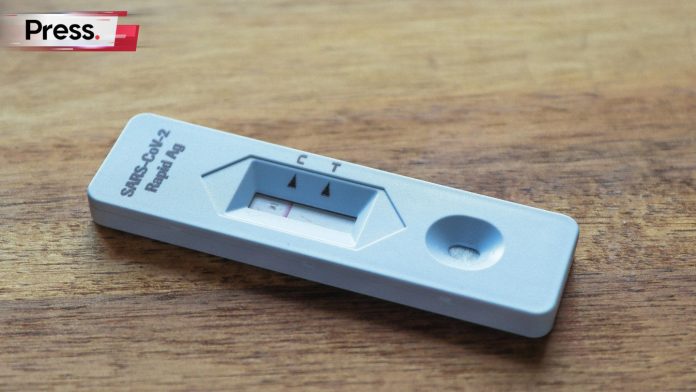
An RTK (Antigen) test detects specific proteins on the surface of the virus through a chemical reaction on a lateral flow strip that triggers a visible color change.
Immediate Practical Explanation
- A sample is collected from the nose or saliva, similar to a standard swab test procedure
- The sample is mixed with a buffer solution
- The liquid flows across a test strip
- If viral antigens are present, a visible colored line appears at the “T” (Test) mark
- A second line must always appear at the “C” (Control) mark to verify that the liquid has properly flowed and the reagents are active
Self-test kits are for screening, not diagnosis — but they offer fast insight.
How Accurate Are RTK Tests In Malaysia?
RTK tests are reliable for detecting high viral loads but can miss some infections.
- Sensitivity: Approximately 50–80%, depending on timing, symptoms, and test brand
- Specificity: Around 99%, meaning false positives are rare
What This Means In Real Life
- A positive RTK result is usually reliable and indicates active infection
- A negative RTK result does not completely rule out infection, especially if symptoms exist or exposure was recent
Accuracy is highest when:
- Testing is done 3–7 days after exposure
- The individual has symptoms
- Testing is repeated over consecutive days
RTK accuracy improves with proper technique, correct timing, and repeat testing, but PCR remains more sensitive overall.
How To Perform An RTK Self-Test Correctly?
RTK test accuracy depends heavily on how the sample is taken.
If the saliva or nasal sample is contaminated, poorly collected, or not mixed properly with the buffer, the result can be misleading.
There is a clear sequence that needs to be followed for the test to work properly.
For saliva kits, the condition of your mouth matters. For nasal swabs, the depth and angle of the swab matter.
For Saliva-Based RTK Kits
- Prepare your mouth
Do not eat, drink, smoke, chew gum, or brush your teeth for at least 30 minutes before testing. These can affect saliva quality and cause an invalid result. - Collect the saliva correctly
Clear your throat and cough gently to bring fluid from the back of the throat into the collection funnel. Avoid just spitting surface saliva. - Mix the sample properly
Add the buffer solution, insert the saliva, and mix exactly as instructed. This usually means shaking or stirring about 20 times to break down mucus. - Apply the sample
Add only the number of drops stated in the instructions, usually three. More or fewer drops can affect the result.
For Nasal Swab RTK Kits
- Position correctly
Gently blow your nose first. Tilt your head slightly back. - Swab properly
Insert the swab about 2 cm straight back into the nostril, not upwards. Rotate it against the inside wall about five times, then repeat in the other nostril. - Extract the sample
Place the swab into the buffer tube, rotate it firmly, and squeeze the sides of the tube while removing the swab to release as much sample as possible.
A common mistake in Malaysian households is reading the result too late.
RTK tests rely on a time-sensitive chemical reaction. Checking the result after the stated time (usually 15–20 minutes) can produce a faint line caused by drying ink, not a true positive.
When Is The Best Time To Take An RTK Test?
RTK tests work best during a short window. The most reliable time to test is 3 to 5 days after exposure or as soon as symptoms begin.
Testing too early, such as Day 1 after contact, often misses the infection because the viral load is still low. This can create a false sense of reassurance.
When To Test For The Best Results
- If You Have Symptoms
Test immediately. A scratchy throat or body aches after a rainy evening in KL should not be dismissed as a simple cold. - If You Were A Close Contact (No Symptoms)
Take your first test on Day 3 after exposure. If the result is negative, repeat the test on Day 5. - If You Are Testing Before An Event
Test as close to the event as possible, ideally within 2 to 4 hours, to reduce the risk of attending while infectious.
In daily life, symptoms are often blamed on air-conditioning or haze. An RTK test provides a practical reality check before visiting elderly parents or attending a packed wedding hall.
How To Interpret Your RTK Result?
The appearance of the lines on the cassette determines your status, but the “C” (Control) line must be present for the test to be valid.
- Positive (Two Lines): Even if the “T” line is so faint you need a flashlight to see it, you are positive. You are likely at the beginning or end of the infection.
- Negative (One Line at C): No virus was detected. If symptoms persist, a PCR test may be necessary for higher sensitivity.
- Invalid (No Line at C): The test failed. This usually occurs if you used too little buffer liquid or the kit was stored incorrectly. Discard and start over.
Faint lines often cause confusion in Malaysian group chats. Scientifically, a faint T line means there is a lower amount of viral antigen present. It still indicates an active infection and potential to spread the virus.
What To Do After An RTK Test Result
If Your Result Is Positive
- Begin isolation immediately
- Report the result if required
- Seek medical advice if symptoms worsen
- PCR confirmation may be required for official or clinical purposes
If Your Result Is Negative
- Continue precautions if symptoms exist
- Repeat testing over the next few days
- Do not assume you are infection-free if exposure was recent
RTK vs PCR: Which One Do You Need?
RTK vs RT-PCR Comparison Table
Feature | RTK (Antigen) | RT-PCR |
Detection Target | Viral Proteins | Viral RNA (Genetic material) |
Purpose | Screening | Diagnosis |
Turnaround Time | 15–30 minutes | 24 to 72 Hours |
Cost | Low (RM3.5–RM130+) | High (RM150–RM380+) |
Sensitivity | Moderate (85% to 95%) | Very High (99%+) |
Best For | Daily screening, quick checks | Travel, surgery, hospital admission |
RTK is for rapid screening and detecting infectiousness, while PCR is for definitive clinical diagnosis and detecting low viral loads.
For the average Malaysian, the RTK is the practical choice for day-to-day life. However, if you are symptomatic but consistently testing negative on RTK, a PCR test is the only way to definitively rule out the virus, as it can detect much smaller fragments of the viral code.
What Is The Average Cost Of An RTK Test In Malaysia?
RTK test prices vary based on how and where the test is done. Self-test kits are the most affordable, while clinic-based tests cost more due to professional handling and documentation.
Service Type | Price Range (RM) | Average Cost (RM) |
Single Self-Test Kit | RM 3.50 – RM 10.00 | RM 6.00 |
Bulk Purchase (25 Units) | RM 60.00 – RM 100.00 | RM 80.00 |
Supervised RTK (Virtual) | RM 15.00 – RM 30.00 | RM 22.00 |
Private Clinic (Walk-In) | RM 40.00 – RM 75.00 | RM 55.00 |
Hospital (Outpatient) | RM 80.00 – RM 130.00 | RM 105.00 |
Self-test kits are the most economical option for routine screening. The “Supervised RTK” is a popular middle-ground where a medical professional observes your self-swab via a video call to provide a validated report. Professional clinic tests remain the standard for official documentation.
Which RTK Test Kits Are Approved By MDA?
Always use RTK kits registered with the Medical Device Authority (MDA). This ensures the test meets national safety and performance standards.
The MDA maintains an official database of approved manufacturers. Buying unbranded kits from social media sellers carries risk, as these products may lack sufficient sensitivity, especially for newer variants.
Commonly trusted brands found in local pharmacies include:
- Salixium – A Malaysian-made kit offering saliva and nasal testing options
- Gancet – Known for simple steps and clear instructions
- AllTest – Commonly used for oral fluid testing
- NewGene – Popular for faster reaction time
Using approved kits also reduces the chance of invalid results, as the buffer solution is calibrated for normal human sample conditions.
Do’s And Don’ts For RTK Testing In Malaysia
Do’s | Don’ts |
Do check the expiry date on the box; expired reagents lose sensitivity. | Don’t perform the test immediately after eating spicy ‘sambal’ or drinking coffee. |
Do use a timer on your phone for exactly 15 minutes. | Don’t reuse any part of the kit, even if it looks clean. |
Do report positive results on MySJ-ID to receive your digital HSO. | Don’t squeeze the cassette, it can disrupt the liquid flow. |
Do dispose of the kit in a sealed bag with a drop of disinfectant. | Don’t store kits in a hot car, the heat of the Malaysian sun kills the antibodies in the kit. |
Summary
The RTK test has become a permanent fixture in the Malaysian health landscape. It offers a balance of speed, cost, and reliability that fits into our fast-paced lives. By understanding the nuances of timing and proper swabbing, you ensure that you are not just “doing a test,” but getting an accurate answer that protects your family and colleagues.
For more info, follow PR agency Malaysia.
Disclaimer: All of the content was thoroughly fact-checked and verified by our editorial team to ensure accuracy, clarity, and reliability.
Legal Disclaimer: All brand names, trademarks, and logos displayed on this website are the intellectual property of their respective owners. Their use herein is solely for identification purposes without written consent or direct affiliation from the respective owner.
Frequently Asked Questions On RTK Test In Malaysia
Can I Use An RTK Test For International Travel From Malaysia In 2026?
Most countries no longer require testing. If it is required, a supervised or clinic-administered RTK is usually the minimum. Always check the latest International Air Transport Association (IATA) updates for your destination.
Why Is My RTK Test Invalid Even If I Followed The Steps?
The most common cause is thick saliva, often from dehydration. Drink water, wait 30 minutes, and repeat the test.
Do I Need To Report A Negative RTK Result On MySJ-ID?
No. Reporting is not required for negative results. Positive results should be reported if you need an official digital Home Surveillance Order.
Can Children Use Saliva-Based RTK Kits?
Yes. They are often preferred for children. Ensure the child does not eat or drink for 30 minutes before testing.
Is A Faint Line On An RTK Test Positive?
Yes. Any visible line at the T mark counts as positive and should be treated as an active infection.