
Malaysia has quietly become one of Southeast Asia’s most practical and rewarding travel destinations.
While countries like Thailand and Indonesia often dominate travel conversations, Malaysia offers something more balanced: modern cities, cultural heritage, tropical islands, and dense rainforests, all within relatively short travel distances.
For international tourists, the real advantage is how smoothly you can move around. You can land in Kuala Lumpur, take a direct train into the city, then within days travel to a heritage hub like Penang, an island resort like Langkawi, or fly to Borneo for wildlife and mountain landscapes.
This guide covers the top places to visit Malaysia, not just from a “beautiful spots” perspective, but through a practical lens: what you can do, how to get there, and what you can realistically expect to spend.
Read More: What Does Gostan Mean: Malaysian Slang Origins and Usage
Quick Comparison Table: Top Destinations in Malaysia
| Destination | Best For | Key Activities | Access |
|---|---|---|---|
| Kuala Lumpur | First-time visitors | City tours, food, landmarks | MRT, LRT |
| Penang | Food & culture | Street food, heritage | Flight, train |
| Langkawi | Island resort | Beaches, cable car | Flight |
| Perhentian Islands | Snorkelling | Marine life | Bus + boat |
| Sabah (Kota Kinabalu) | Nature & adventure | Hiking, islands | Flight |
| Cameron Highlands | Cool climate | Tea, trekking | Bus |
| Malacca | History | Museums, markets | Bus |
| Taman Negara | Rainforest | Jungle trekking | Bus + boat |
| Tioman Island | Quiet island | Diving | Ferry |
| Gunung Mulu | Unique landscapes | Caves | Flight |
Selection Criteria
This list is designed specifically for international travellers, focusing on destinations that are not just visually appealing, but also practical to visit.
- Accessibility via public transport or short flights
- Range of activities at each destination
- Suitability for first-time visitors
- Infrastructure and ease of navigation
- Balance between iconic highlights and unique experiences
How To Get Around Malaysia Efficiently
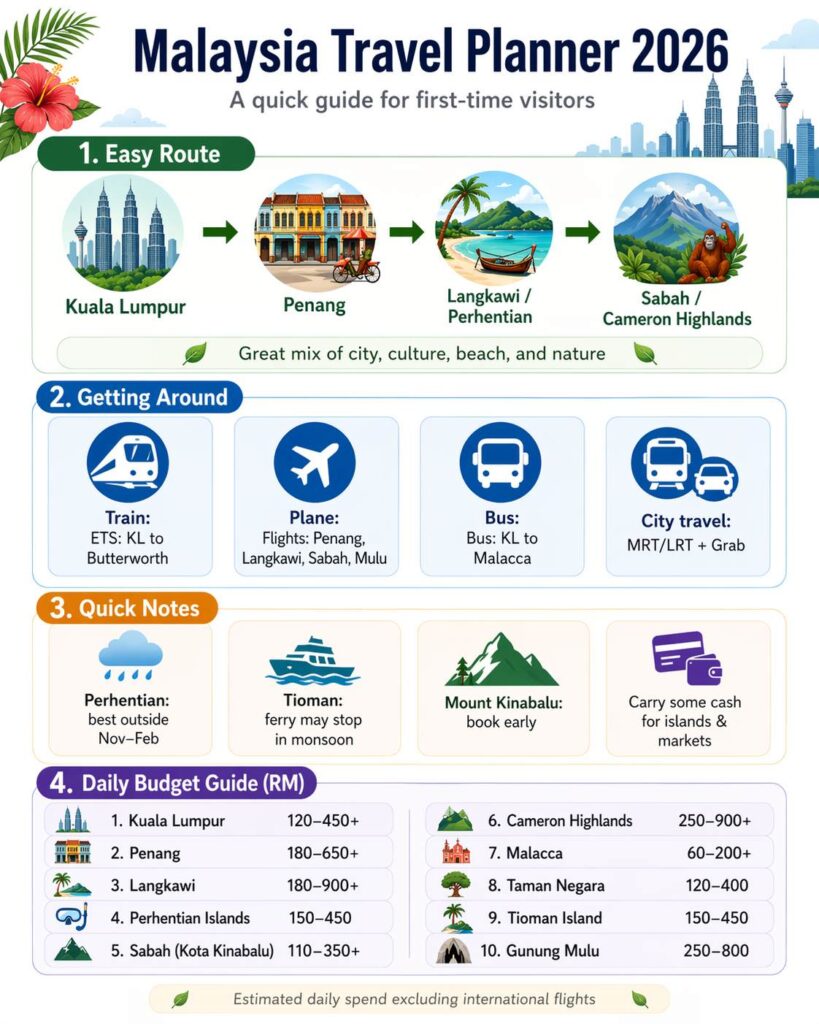
Malaysia’s transport network makes multi-destination travel far more manageable than many first-time visitors expect.
- Trains: The ETS rail system connects KL Sentral to northern cities like Ipoh and Butterworth (Penang mainland), which is a convenient jumping-off point for Penang
- Urban Transit: Kuala Lumpur’s MRT, LRT, and monorail systems cover most major tourist areas
- Flights: AirAsia operates many low-cost domestic routes, while Malaysia Airlines is a full-service carrier with extensive domestic connectivity
- Buses: Long-distance buses are widely used and reliable, especially for routes like Kuala Lumpur to Malacca
Suggested 7–10 Day Travel Route
A well-planned itinerary can cover multiple highlights without feeling rushed:
- Day 1–3: Kuala Lumpur (city, food, landmarks)
- Day 4–5: Penang (culture and cuisine)
- Day 6–7: Langkawi or Perhentian Islands (beach experience)
- Day 8–10: Sabah or Cameron Highlands (nature extension)
1) Kuala Lumpur (Best Urban Gateway)
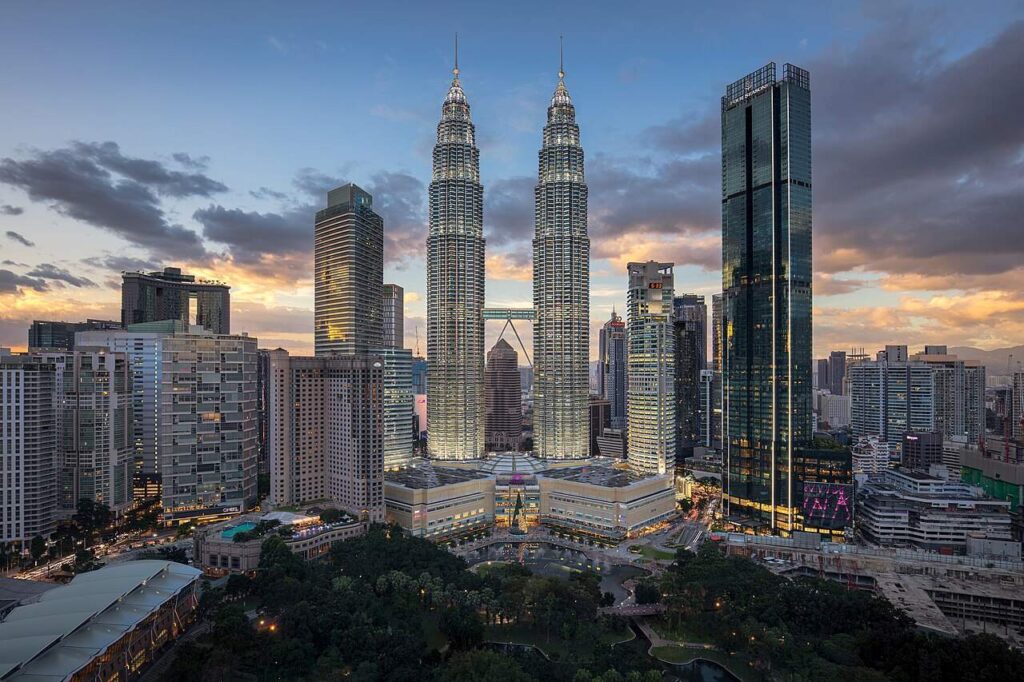
Located in central Peninsular Malaysia, Kuala Lumpur is the country’s capital and the primary entry point for international travellers. Its skyline is dominated by the Petronas Twin Towers, while nearby attractions like KL Tower and Batu Caves provide a mix of modern and cultural landmarks.
The city is also where many visitors get their first real introduction to Malaysian diversity. From the nightlife of Bukit Bintang to the heritage streets of Chinatown and the Indian enclave of Brickfields, Kuala Lumpur offers a layered urban experience that goes beyond typical city tourism.
Best For: First-time visitors, city exploration
What To Do:
- Visit Petronas Twin Towers
- Explore Batu Caves
- Try street food in Jalan Alor
How To Get There & Get Around:
- Arrive via KLIA (Terminal 1) or KLIA Terminal 2
- KLIA Ekspres reaches KL Sentral in 28 minutes from Terminal 1 and 33 minutes from Terminal 2
- MRT and LRT systems provide extensive coverage
Average Cost (Per Day, RM):
- Budget: RM120–180
- Mid-range: RM250–450
- Luxury: RM600+
Editor’s Note: I work here, and KL is a great place to visit if you’re up for exploring the big city, with loads of food and culturally significant places to see. Give it a try, and maybe wander off the beaten path a little to discover things outside the typical tourist areas.
2) Penang (Best Food And Culture Destination)
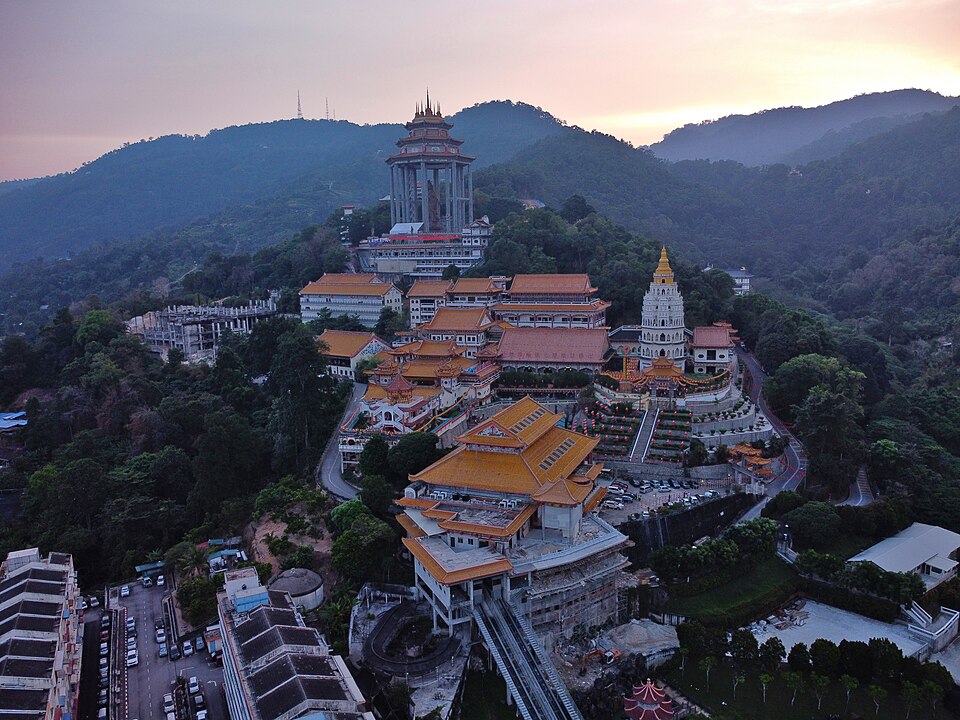
Penang, located off the northwest coast of Peninsular Malaysia, is one of the country’s most culturally rich destinations. George Town is a UNESCO World Heritage Site filled with colonial buildings, temples, and street art.
What truly sets Penang apart is its food. The island is widely recognised as Malaysia’s culinary capital, with hawker centres serving dishes like char kway teow, laksa, and nasi kandar.
Best For: Food lovers, cultural travellers
What To Do:
- Street food tours
- Explore George Town
- Visit heritage sites
How To Get There & Get Around:
- ~1-hour flight from Kuala Lumpur
- ETS train to Butterworth (mainland) + onward transfer into George Town
- Grab and buses for local travel
Average Cost (Per Day, RM):
- Budget: RM180–280
- Mid-range: RM350–650
- Luxury: RM900+
Editor’s Note: It’s a food paradise! Aside from popular dishes like char koay teow and laksa, you should also try the cendol (a type of shaved ice dessert). One good option would be Teochew Cendol at Lebuh Keng Kwee.
3) Langkawi (Best Island Resort Experience)
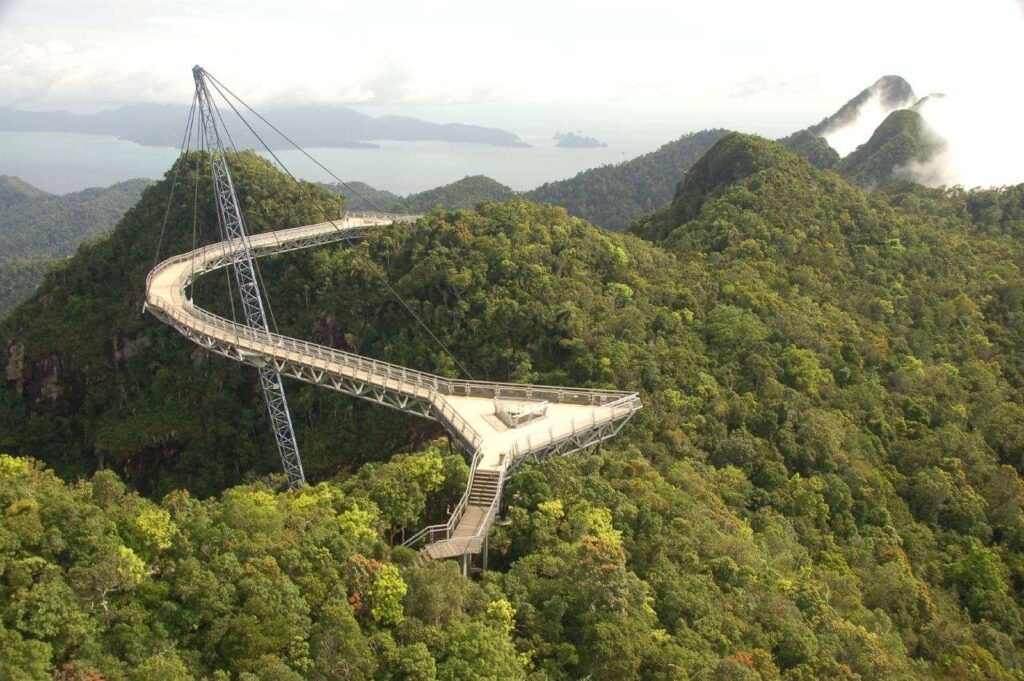
Langkawi is an archipelago in Kedah, near the northern border with Thailand. It’s one of Malaysia’s most developed island destinations, known for its beaches, resorts, and duty-free shopping.
Beyond its beaches, Langkawi offers structured attractions like the cable car and Sky Bridge, which deliver panoramic views with minimal effort.
Best For: Relaxation, beach holidays
What To Do:
- Cable car ride
- Island hopping
- Beach activities
How To Get There & Get Around:
- Direct flights from Kuala Lumpur or Penang
- Ride-hailing apps and taxis
- Car rental for flexibility
Average Cost (Per Day, RM):
- Budget: RM180–320
- Mid-range: RM450–900
- Luxury: RM1,200+
Read More: A Guide to Understanding Malaysian Slang: Lah, Meh, Mah
4) Perhentian Islands (Best For Snorkelling And Diving)
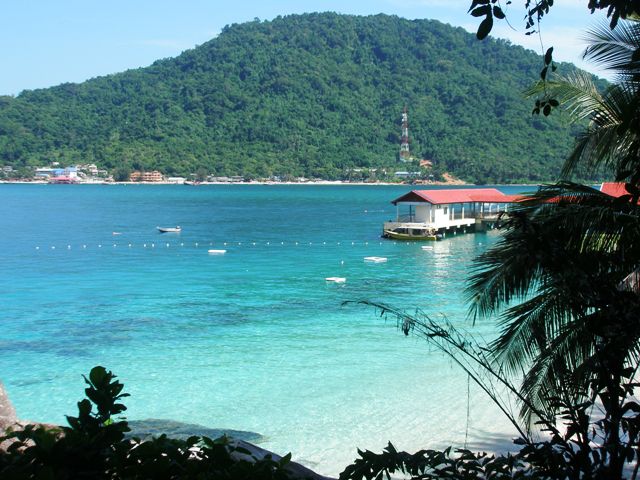
Located off the coast of Terengganu, the Perhentian Islands are known for clear waters and coral reefs. The islands are split into Perhentian Besar and Perhentian Kecil, each catering to different travel styles.
Compared to Langkawi, the Perhentians are less developed, which is part of their appeal. The focus here is on marine life, beaches, and a slower pace.
Season note: Many resorts and boat services scale back (or stop) during the Northeast Monsoon (roughly Nov–Feb), so plan this stop outside peak monsoon months.
Best For: Snorkelling, diving
What To Do:
- Snorkel with turtles and reef fish
- Relax on beaches
How To Get There & Get Around:
- Bus (or flight) to Kota Bharu, then continue to Kuala Besut
- Boat transfer from Kuala Besut
- Walking and boat taxis locally
Average Cost (Per Day, RM):
- Budget: RM150–230
- Mid-range: RM300–450
5) Sabah (Kota Kinabalu) (Best For Nature And Adventure)
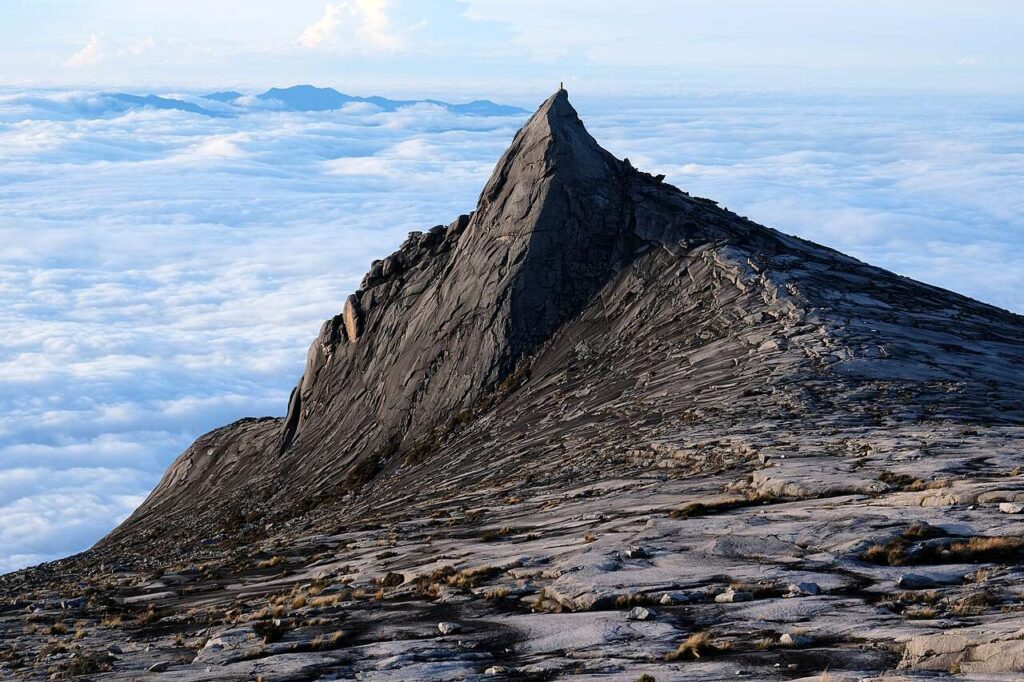
Sabah is in East Malaysia on the island of Borneo, with Kota Kinabalu as its main gateway. It’s home to Mount Kinabalu, as well as island-hopping spots and diverse ecosystems.
The ability to combine mountain climbing, island trips, and wildlife experiences within a single region makes Sabah one of the most versatile destinations in Malaysia.
Mount Kinabalu planning note: Climbing requires advance booking, and a mountain guide is required under park rules.
Best For: Adventure, nature
What To Do:
- Climb Mount Kinabalu
- Explore nearby islands and marine parks
How To Get There & Get Around:
- Fly into Kota Kinabalu (most international visitors connect via Kuala Lumpur)
- Local taxis and tours
- Boats for island trips
Average Cost (Per Day, RM):
- Budget: RM110–180
- Mid-range: RM230–350
- Luxury: RM500+
6) Cameron Highlands (Best Cool Climate Escape)
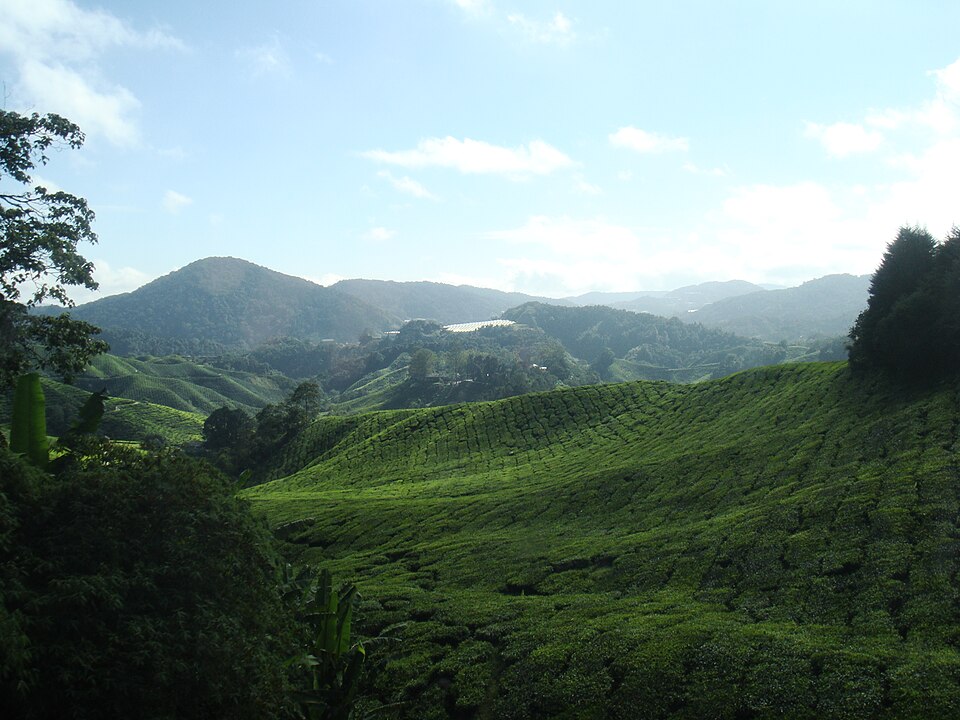
Located in Pahang, Cameron Highlands is known for cooler temperatures and rolling tea plantations, an easy contrast to Malaysia’s tropical lowlands.
The region is popular for scenic landscapes, light trekking, and relaxed towns like Tanah Rata, making it ideal for short getaways.
Best For: Relaxation, nature
What To Do:
- Visit tea plantations
- Explore forest trails
How To Get There & Get Around:
- Bus or car from Kuala Lumpur
- Local tours or taxis
Average Cost (Per Day, RM):
- Budget: RM250–350
- Mid-range: RM600–900
- Luxury: RM1,200+
Editor’s Note: The cool air is the main draw (I enjoy it whenever I’m up there), but you can also buy a huge variety of fresh local fruits, vegetables, and even plants up in Cameron Highlands!
7) Malacca (Best Historical City)
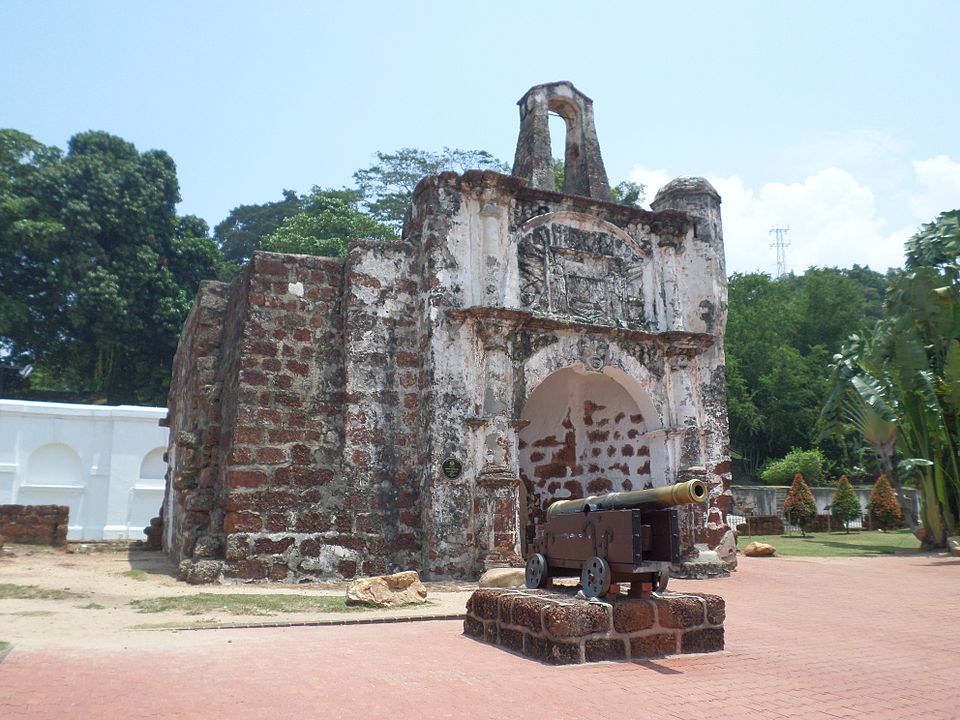
Malacca is located south of Kuala Lumpur and is one of Malaysia’s most historically significant cities. It reflects centuries of colonial influence through its architecture and landmarks.
Its compact layout makes it easy to explore, with Jonker Street acting as the main hub for food, shopping, and nightlife.
Best For: History, culture
What To Do:
- Visit Dutch Square
- Explore Jonker Street
How To Get There & Get Around:
- Bus from Kuala Lumpur (~2–2.5 hours, depending on traffic)
- Walking within the city
Average Cost (Per Day, RM):
- Budget: RM60–120
- Mid-range: RM120–200
- Luxury: RM250+
8) Taman Negara (Best Rainforest Experience)
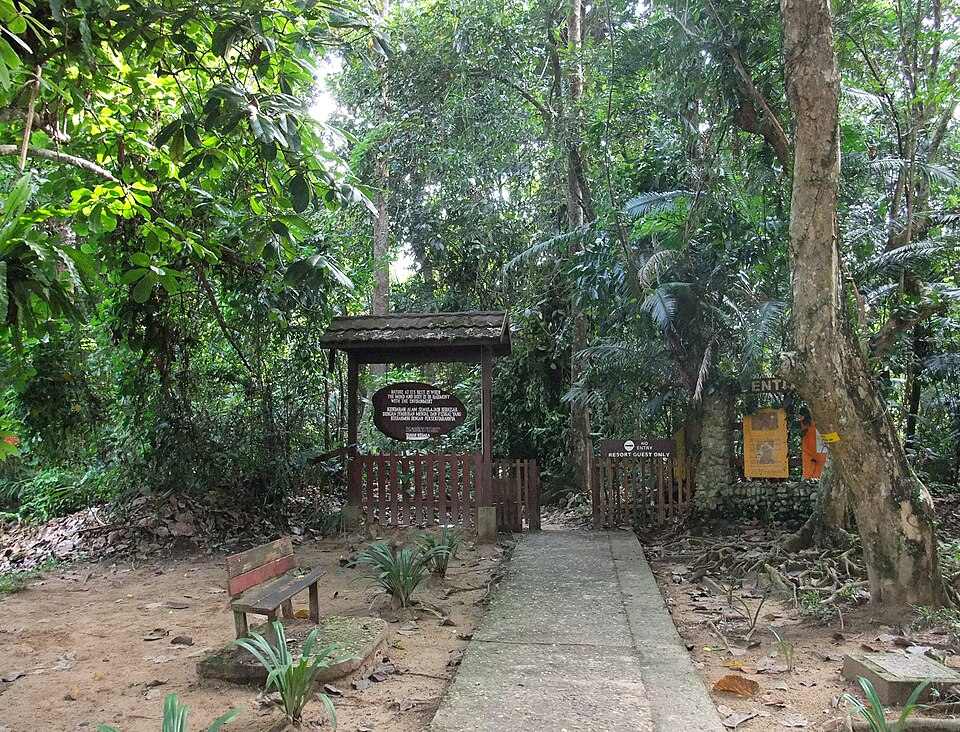
Located in Peninsular Malaysia, Taman Negara is often cited as over 130 million years old, and it offers an immersive jungle experience that’s rare in modern travel.
Visitors can expect guided treks, canopy walks, and river-based exploration, making it a more activity-focused destination.
Best For: Adventure, nature
What To Do:
- Jungle trekking
- Canopy walk
How To Get There & Get Around:
- Bus to Kuala Tahan
- Boat transport within the park
Average Cost (Per Day, RM):
- Budget: RM120–200
- Mid-range: RM250–400
9) Tioman Island (Best Underrated Island Escape)
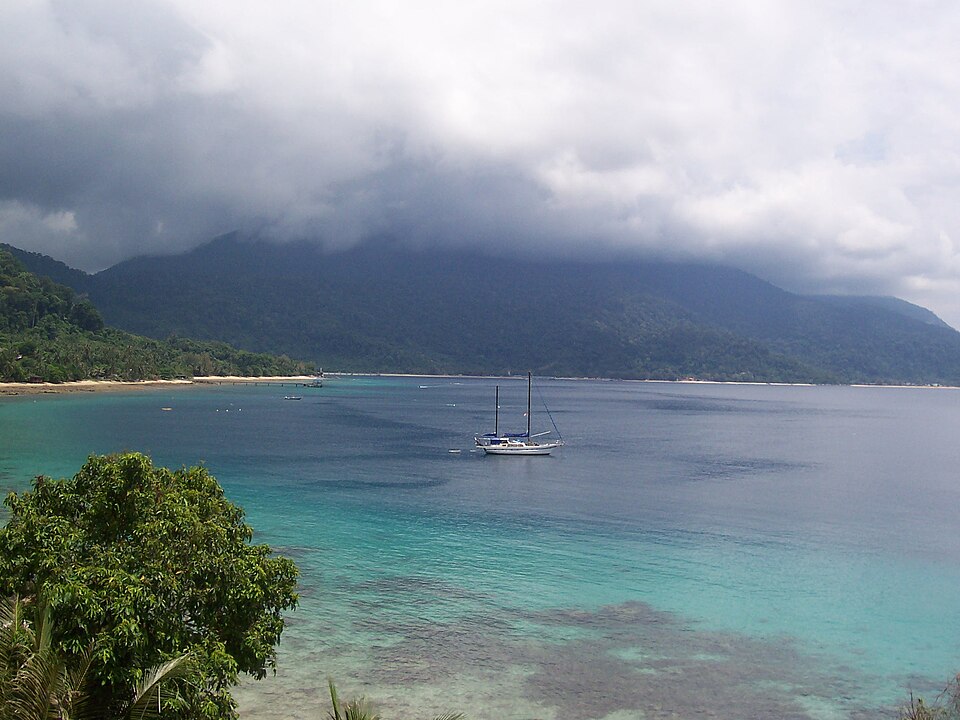
Tioman Island is located off the coast of Johor and is known for clear waters and jungle landscapes. It’s often quieter than more “packaged” island destinations, which makes it appealing for travellers looking to disconnect.
Ferry note: During monsoon season, authorities may temporarily suspend ferry services, and cancellations can sometimes last multiple days.
Best For: Relaxation, diving
What To Do:
- Snorkelling
- Beach exploration
How To Get There & Get Around:
- Ferry from Mersing (or nearby departure points depending on season/operator)
- Walking and boat taxis
Average Cost (Per Day, RM):
- Budget: RM150–260
- Mid-range: RM250–450
Read More: A Foreigner’s Guide to WRT License in Malaysia: Fees & Process
10) Gunung Mulu National Park (Best Unique Landscape Experience)
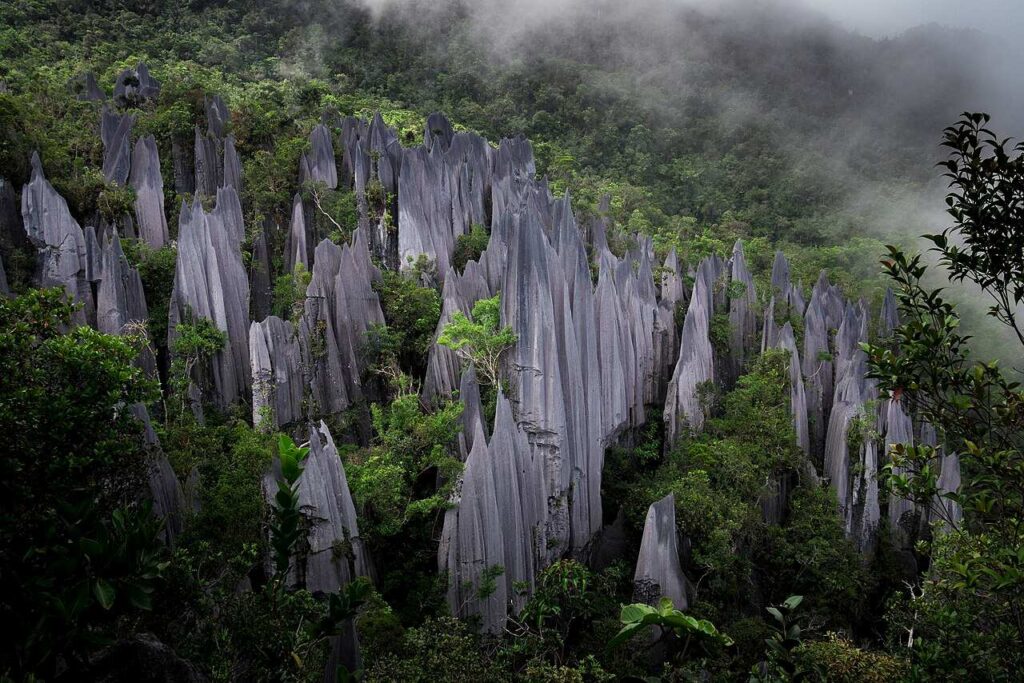
Located in Sarawak on Borneo, Gunung Mulu National Park is a UNESCO World Heritage Site known for its massive cave systems and limestone formations.
Because of its remote location, visiting Mulu feels more like an expedition than a casual stop. Most cave visits are guided, and flights are typically routed via Miri.
Best For: Adventure, unique landscapes
What To Do:
- Cave exploration
- Jungle trekking
How To Get There & Get Around:
- Fly to Miri, then take a short flight into Mulu
- Guided tours within the park
Average Cost (Per Day, RM):
- Budget: RM250–450
- Mid-range: RM450–800
Choose Malaysia as Your Holiday Spot
Malaysia remains one of the most practical and rewarding destinations in Southeast Asia, offering variety without the complexity often found in multi-country travel. With efficient transport, strong tourist infrastructure, and a mix of city, island, and rainforest experiences, it’s an especially good fit for international travellers who want a high-impact trip within a manageable timeframe.
Planning your Malaysia itinerary for 2026? Save this list, map your route, and book transportation early for island and Borneo stops.
Own a hotel, tour, café, or attraction in these destinations? PRESS PR Agency helps travel brands get discovered at the planning stage through SEO that reaches international tourists searching for experiences like these. Contact PRESS, Malaysia’s trusted PR agency, today to get your business seen by the right audience.
Sources
- KLIA Ekspres (official journey times & FAQs)
- KTMB ETS (official rail network / routes)
- UNESCO World Heritage Centre (Melaka & George Town; Gunung Mulu National Park listings)
- MetMalaysia (official monsoon/seasonal weather patterns overview)
- Marine Parks of Malaysia (Perhentian visitor guidance / monsoon season operations)
- BudgetYourTrip (Malaysia destination-level daily travel cost benchmarks)
- UNESCO Tentative Lists (Taman Negara age/heritage context)
- Tioman ferry operator advisories (service disruption/monsoon notices)
- Malaysia Marine Department (shipping/ferry-related notices and advisories)
Frequently Asked Questions About What To Do When You Visit Malaysia
What Is The Best Time To Visit Malaysia?
Malaysia can be visited year-round, but seasons vary by coast. The Northeast Monsoon (Nov–Mar) is typically wetter on the east coast (including many island areas), while the Southwest Monsoon (late May–Sep) is generally drier, with inter-monsoon periods in between.
Is Malaysia Expensive For Tourists?
Malaysia is generally affordable for international travellers, with clear options for budget, mid-range, and luxury travel depending on destination and season.
How Do Tourists Travel Between Cities In Malaysia?
Most travellers use trains, buses, and domestic flights depending on distance, with Kuala Lumpur acting as the most common hub for connections.
Is Malaysia Safe For International Tourists?
Malaysia is generally safe for tourists, especially in major cities and well-known destinations. Standard travel precautions still apply.
Can You Visit Multiple Destinations In One Trip?
Yes. Malaysia’s transport network makes it realistic to combine cities, islands, and nature areas in a week or more.
Do Tourists Need Cash Or Are Cards Widely Accepted?
Cards are widely accepted in cities and larger businesses, but cash is still useful for markets, smaller vendors, and some island locations.