
Key Takeaways
- Heatwaves in Malaysia can increase risks of dehydration, fatigue, and heat-related illnesses.
- Urban homes and apartments often trap heat, making cooling strategies essential.
- Hydration, ventilation, and clothing choices significantly affect comfort and safety.
- Children and elderly individuals are more vulnerable during extreme hot weather.
- Simple, affordable cooling methods can help Malaysians stay safe without heavy air-conditioning use.
Table of Contents
ToggleA heatwave refers to a period of unusually hot weather that can raise health risks and disrupt daily routines. In Malaysia, MetMalaysia defines a heatwave when the daily maximum temperature exceeds 37°C for three consecutive days.
Malaysia’s tropical climate is known for heat and humidity, and research suggests heatwaves in Peninsular Malaysia have increased over time, with affected areas and durations rising under common heatwave definitions.
Organisations, media outlets, and Digital PR Agencies in Malaysia can all play a significant role in educating communities about heat safety and preparedness, publishing timely updates, and increasing public awareness of extreme weather occurrences.
Understanding how to stay cool during a heatwave in Malaysia is no longer just about comfort. It is about protecting health, maintaining productivity, and preventing heat-related illnesses such as dehydration, heat exhaustion, and heatstroke.
Why Heatwaves Are Becoming More Common in Malaysia
According to weather observations and climate trends, Malaysia has experienced rising temperatures and longer dry periods in recent years. Urban areas like Kuala Lumpur, Penang, and Johor Bahru often experience urban heat island effects, where buildings and concrete surfaces retain heat.
During a heatwave in Malaysia, residents may experience:
- Poor sleep due to hot nights
- Increased electricity usage
- Reduced productivity
- Higher risk of heat exhaustion
- Dehydration and fatigue
These conditions make it essential to understand Malaysia hot weather tips that are practical and accessible.
Understanding Health Risks During a Heatwave (Heat Exhaustion)
During a heatwave, prolonged exposure to high temperatures and humidity can increase the risk of heat exhaustion, particularly among Malaysian urban residents, children, and elderly individuals. Malaysia’s humid climate makes it harder for the body to cool down through sweating, which can quickly lead to dehydration and fatigue.
What Is Heat Exhaustion?
Heat exhaustion occurs when the body loses excessive water and salt due to sweating, causing the body to struggle to regulate temperature. Without proper intervention, heat exhaustion can develop into heatstroke, a more serious and potentially life-threatening condition.
Common Symptoms of Heat Exhaustion
Malaysians should watch for early warning signs, including:
- Excessive sweating
- Dizziness or light-headedness
- Fatigue or weakness
- Headaches
- Nausea or vomiting
- Muscle cramps
- Rapid heartbeat
These symptoms can appear quickly during a heatwave in Malaysia, especially when spending time outdoors or in poorly ventilated environments.
Who Is Most At Risk?
Certain groups are more vulnerable to heat exhaustion:
- Elderly individuals
- Young children
- Outdoor workers
- Pregnant women
- People with chronic health conditions
- Urban residents living in poorly ventilated apartments
Caregivers and families should pay extra attention to these groups during extreme hot weather.
What To Do If Someone Experiences Heat Exhaustion
If symptoms appear:
- Move to a cool or shaded area immediately
- Drink water slowly
- Use cool towels or take a cool shower
- Rest and avoid physical activity
If symptoms worsen or do not improve, seek medical attention promptly.
10 Ways Malaysians Can Stay Cool During a Heatwave
1. Stay Hydrated Throughout the Day
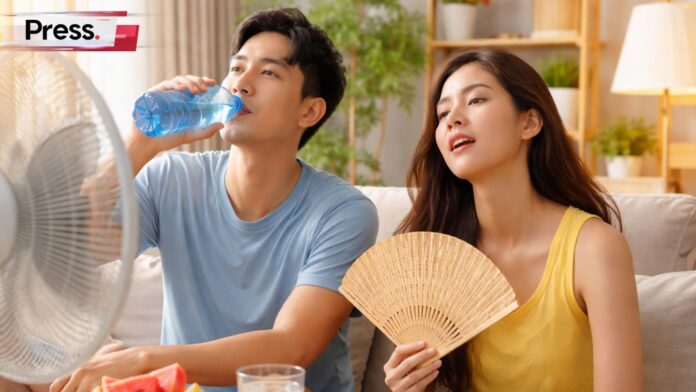
Hydration is one of the most important strategies during a heatwave. When temperatures rise, your body loses fluids faster through sweating.
Hydration tips include:
- Drink water regularly, even if you are not thirsty
- Avoid excessive caffeine and sugary drinks
- Eat water-rich fruits like watermelon, papaya, and oranges
- Carry a water bottle when outdoors
Children and elderly individuals are particularly vulnerable to dehydration, so caregivers should monitor their fluid intake.
2. Improve Ventilation at Home
Poor airflow can trap heat indoors, especially in apartments and high-rise units common in Malaysian cities.
Ways to improve ventilation:
- Open windows during early morning and evening
- Use cross-ventilation by opening opposite windows
- Position fans near windows to push hot air out
- Use standing fans instead of ceiling fans for targeted cooling
This is one of the most effective ways to cool down without air-cond in Malaysia.
3. Use Curtains or Blinds to Block Sunlight
Direct sunlight can significantly increase indoor temperatures during a heatwave Malaysia scenario.
Consider:
- Blackout curtains: Block direct sunlight, reduce indoor heat buildup, and improve comfort during hot Malaysian afternoons.
- Reflective window films: Reflect solar heat away from windows, helping lower indoor temperatures and reduce cooling energy needs.
- Closing blinds during peak afternoon heat: Prevent afternoon sunlight entering homes, reducing indoor heat accumulation and maintaining cooler living spaces.
Blocking direct sunlight can reduce solar heat gain through windows and improve indoor comfort, especially during long cooling seasons.
4. Choose Lightweight and Breathable Clothing
Cooling clothing plays an important role in managing body temperature.
Recommended clothing:
- Cotton fabrics
- Loose-fitting clothing
- Light-coloured outfits
- Breathable footwear
Avoid:
- Tight clothing
- Synthetic fabrics
- Dark colours that absorb heat
These simple adjustments can help Malaysians stay comfortable during hot weather.
5. Avoid Outdoor Activities During Peak Heat Hours
Peak heat typically occurs between:
- 11:00 AM – 4:00 PM
During a heatwave, limit outdoor activities such as:
- Exercise
- Outdoor work
- Errands
If outdoor activities are necessary:
- Wear hats
- Use umbrellas
- Apply sunscreen
- Stay in shaded areas
This helps reduce the risk of heat exhaustion and sun exposure.
6. Take Cool Showers or Use Damp Towels
Cooling your body directly can provide immediate relief during extreme heat.
Effective cooling methods:
- Take cool showers
- Use damp towels on neck and wrists
- Wash face regularly
- Use cooling sprays
These methods help regulate body temperature quickly.
7. Reduce Heat from Appliances
Home appliances generate heat, which can worsen indoor temperatures.
Try to:
- Avoid using ovens during hot afternoons
- Turn off unused electronics
- Use LED lighting instead of traditional bulbs
- Cook during cooler hours
These small adjustments help reduce heat at home in Malaysia.
8. Stay in Cooler Areas of Your Home
Heat tends to accumulate in certain parts of the house.
Tips:
- Stay on lower floors if possible
- Use shaded rooms
- Avoid west-facing rooms during afternoon heat
- Use floor mats instead of thick carpets
These strategies help Malaysians manage indoor heat effectively.
9. Recognise Heat Exhaustion Symptoms
Heat-related illnesses can develop quickly during a heatwave Malaysia period.
Common symptoms include:
- Dizziness
- Excessive sweating
- Fatigue
- Headache
- Nausea
If symptoms appear:
- Move to a cooler place
- Drink water
- Rest immediately
Seek medical attention if symptoms worsen.
Children and elderly individuals should be monitored closely.
10. Use Affordable Cooling Alternatives
Air-conditioning may not always be accessible or affordable. Fortunately, there are alternative cooling solutions.
Affordable cooling ideas:
- Place ice in front of fans
- Use cooling gel pillows
- Use bamboo mats
- Sleep with breathable bedding
- Use portable fans
These are practical ways to stay cool during a heatwave without increasing electricity costs.
Who Is Most at Risk During a Heatwave?
Certain groups are more vulnerable:
- Elderly individuals
- Young children
- Pregnant women
- Outdoor workers
- Individuals with chronic health conditions
Caregivers should take extra precautions and monitor these groups carefully.
Conclusion: Stay Safe and Stay Informed During Heatwaves
Heatwaves are becoming more common in Malaysia, making it increasingly important for urban residents, families, and caregivers to understand how to stay cool and protect their health. Simple steps such as hydration, ventilation, and clothing adjustments can significantly reduce heat-related risks.
Staying informed is equally important. Reliable updates, public awareness, and trusted information help Malaysians prepare better for extreme weather conditions.
For organisations, communities, and businesses looking to share important updates or raise awareness, our digital PR services can help you improve reach, credibility and public awareness.
Stay cool, stay hydrated, and stay informed during the next heatwave.
Disclaimer note: This article is for general information only and doesn’t replace medical advice. If symptoms are severe, worsening, or include fainting/confusion, seek urgent medical care.
Sources:
- MetMalaysia – Weather Phenomena (Heat wave definition & Malaysia threshold: >37°C for 3 consecutive days) (no date shown on page)
- Bernama (quoting MOH, March 2026) – Malaysia heatwave definition and public advice (Published March 2026)
- WHO – Heat and health fact sheet (28 May 2024)
- CDC – About Heat and Your Health (25 Jul 2025)
- CDC/NIOSH – Heat-related Illnesses (Heat exhaustion definition & symptoms) (3 Mar 2026)
- Mayo Clinic – Heat exhaustion symptoms (6 Apr 2023)
- Scientific Reports (Nature portfolio) – Heatwaves in Peninsular Malaysia spatiotemporal analysis (trend evidence) (2024)
- NAHRIM PDF – Climate change and health in Malaysia (heat risk framing; hotter days/frequency/intensity expectations) (PDF; appears recent)
- U.S. Dept of Energy – Energy-efficient window coverings (window films block solar heat gain; general guidance) (Energy.gov)
FAQs
1. What should I do during a heatwave in Malaysia?
Stay hydrated, avoid outdoor activities during peak hours, improve ventilation, and monitor signs of heat exhaustion.
2. How can I cool my house without air-conditioning in Malaysia?
Use cross-ventilation, blackout curtains, fans, and reduce appliance heat to keep indoor temperatures lower.
3. What are the signs of heat exhaustion?
Common symptoms include dizziness, fatigue, excessive sweating, headache, and nausea. Immediate cooling is recommended.
4. How much water should I drink during hot weather?
Drink water regularly throughout the day. Increase intake when sweating or spending time outdoors.
5. Who is most vulnerable during heatwaves?
Elderly individuals, children, and people with health conditions are more susceptible to heat-related illnesses.
6. Are heatwaves becoming more common in Malaysia?
Climate patterns and urban heat effects have contributed to more frequent and intense hot weather conditions.